Tell us about the job
Takes about a minute. No obligation.
Homes in Belknap County, NH run heat about nine months a year, from September through May. The burner and heat exchanger spend very little of the year idle. A contractor diagnosing a furnace repair here finds components that have been cycling through most of the calendar, and the cumulative wear on the ignition system and heat exchanger reflects that. A cracked heat exchanger or a failing igniter in a house like this is not surprising; it is what sustained seasonal load produces in components that never get a long rest between seasons.
Furnace repair in an older house turns on what the opened equipment actually contains. Cracked heat exchangers, worn inducer motors, corroded flame sensors: these are what stock of this vintage accumulates, and finding them is what drives the final scope of a repair. Half the homes in Belknap County, New Hampshire were built in 1979 or earlier (2020-2024 ACS 5-year). A contractor working here expects the system itself to be the story, not a peripheral detail, and prices accordingly.
The Parts of a Furnace a Contractor Checks First
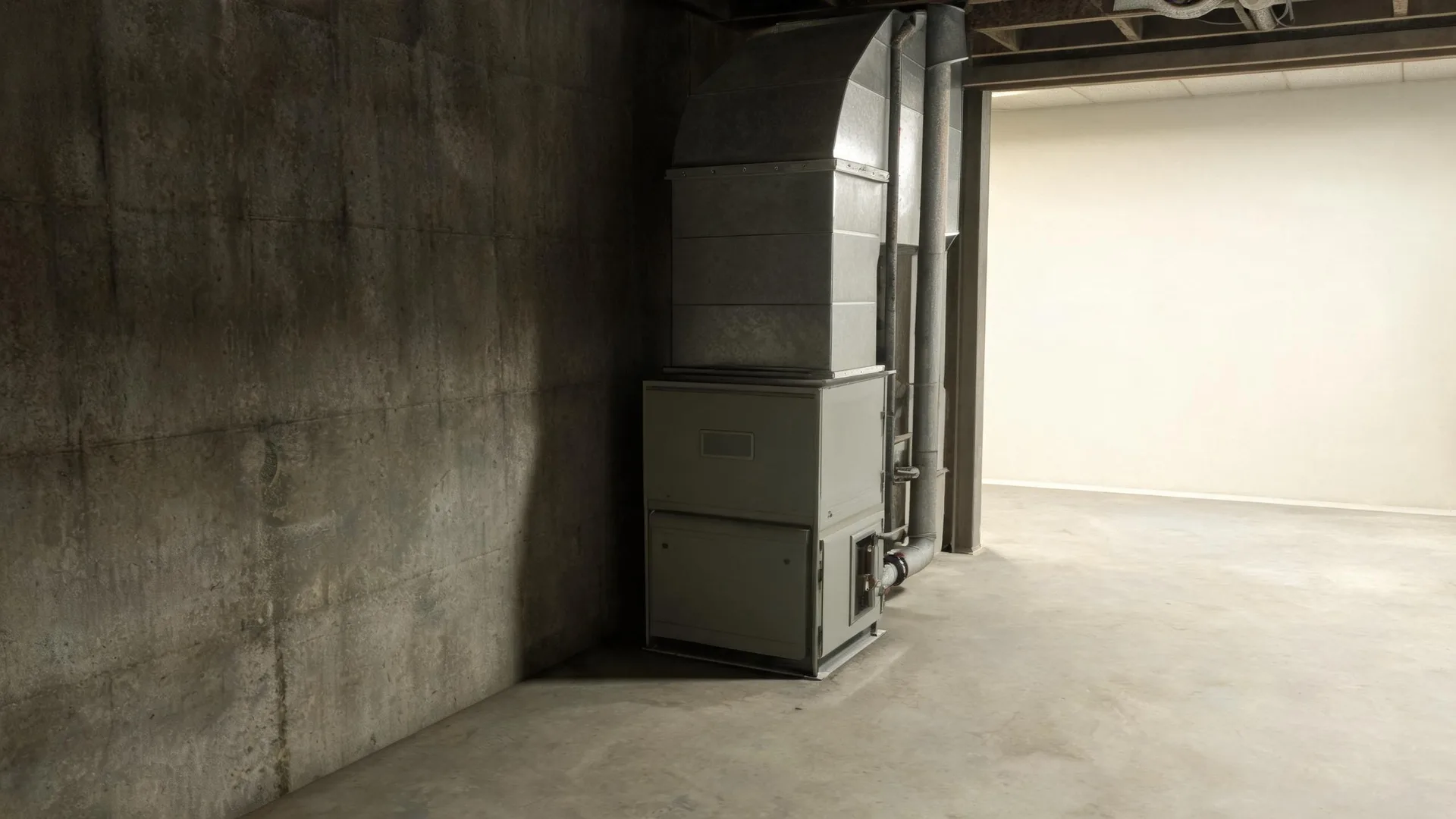
The furnace itself sits in a basement, utility room, or closet and is the piece a contractor goes to first. Inside it, the heat exchanger does the work of warming the air that moves through your home. When the exchanger cracks or the burners misfire, the furnace produces little heat or none at all.
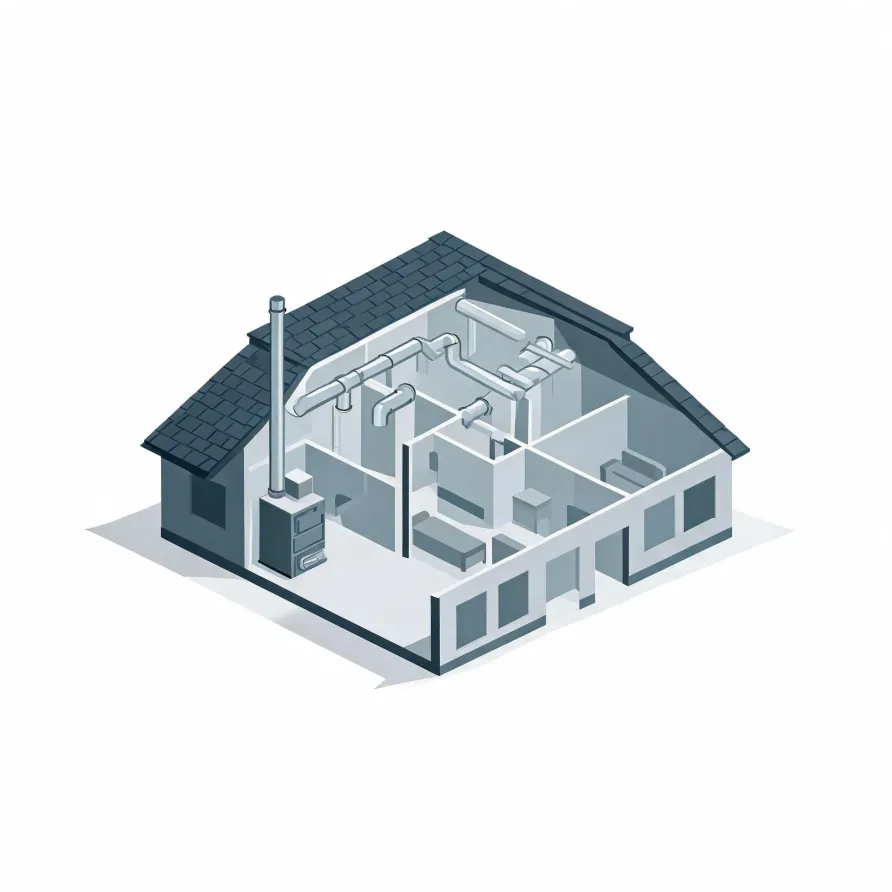
The blower motor pushes conditioned air out through the supply side and pulls return air back in. The flue or vent pipe runs from the furnace to an outside wall or through the roof, carrying combustion gases out. The thermostat on your wall is where the signal originates, and a fault there can look exactly like a fault in the furnace itself.
The drawing shows a typical layout, and a licensed contractor determines which components apply to your specific system and home.
Find a contractor in Belknap CountyBelknap County by the numbers
96 severe weather events were recorded in Belknap County, New Hampshire between 2015 and 2024.
NOAA National Centers for Environmental Information, Storm Events Database, bulk CSV export, events 2015-01-01 through 2024-12-31.Half the homes in Belknap County, New Hampshire were built in 1979 or earlier (2020-2024 ACS 5-year).
U.S. Census Bureau, 2020-2024 American Community Survey 5-Year EstimatesBelknap County, New Hampshire holds 39,003 housing units (2020-2024 ACS 5-year).
U.S. Census Bureau, 2020-2024 American Community Survey 5-Year EstimatesOwners occupy 80.1% of the occupied homes in Belknap County, New Hampshire (2020-2024 ACS 5-year).
U.S. Census Bureau, 2020-2024 American Community Survey 5-Year EstimatesCodes & Standards Governing Furnace Repair in Belknap County, New Hampshire6 sourced rules & standards
What Happens When a Contractor Comes Out
Non-weatherized gas furnaces manufactured on or after November 19, 2015 must reach 80.0 percent AFUE.
Non-weatherized oil-fired furnaces manufactured on or after November 19, 2015 must reach 83.0 percent AFUE.
Mobile home gas furnaces manufactured on or after November 19, 2015 must reach 80.0 percent AFUE.
Non-weatherized gas furnaces manufactured on or after December 18, 2028 must reach 95.0 percent AFUE, up from the 80.0 percent minimum that applies to units manufactured before that date.
Licensing Rules for HVAC Repair in Belknap County, New Hampshire
New Hampshire's mechanical licensing board issues nine credentials — hearth system, four fuel gas endorsements, domestic appliance technician, and master, journeyman and apprentice plumber — and a licensee may not work outside the specialty their licence names. None of the nine is an HVAC licence.
New Hampshire does not license HVAC as a trade, and says so where it matters: the plumbing licence expressly does not reach a person installing heating, cooling, air conditioning or domestic water heating systems, whether solar, oil, gas or electric. The gas piping on a gas-fired system is a separate matter and needs a fuel gas fitter licence.
Severe Weather Events in Belknap County
Belknap County's weather puts real demands on furnace components over time. Knowing the local pattern of storm activity helps explain why repair needs here are not the same as they are elsewhere.
96 severe weather events, 2015–2024. Source: NOAA National Centers for Environmental Information, Storm Events Database.