
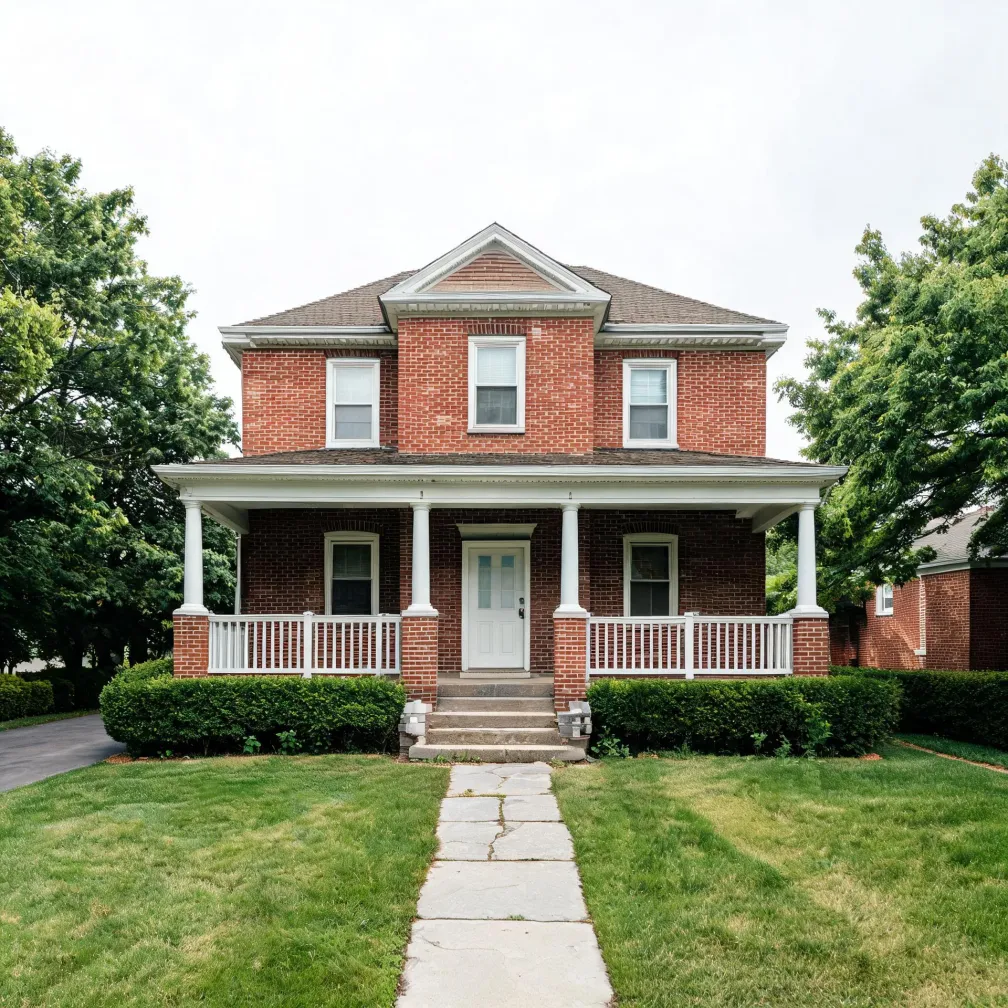
What New Hampshire homes are up against.
NOAA National Centers for Environmental Information, Storm Events Database, bulk CSV export, events 2015-01-01 through 2024-12-31. · U.S. Census Bureau, 2020-2024 American Community Survey 5-Year Estimates

A furnace here earns its failures honestly. Homes in New Hampshire run heat about nine months a year, from September through May. That means the burner, the heat exchanger, and the ignition system are working through the cold months and sitting idle only briefly before the next season starts. An undersized unit or a sloppy install has almost no idle time to hide behind, and stress on cycling components accumulates in a way that a shorter season simply does not produce. A contractor quoting a job here is looking at equipment that has been asked to perform hard and often, and what they find in the existing system tells them what the next one has to handle.
A quote for a new furnace depends on what the contractor finds inside the house, and in New Hampshire that is rarely straightforward to predict. Half the homes in New Hampshire were built in 1979 or earlier (2020-2024 ACS 5-year). That distribution means a contractor arriving at a typical house in the state is likely to find ductwork sized to an older load calculation and electrical service that was never planned around a modern air handler. Neither can be taken as given. The contractor measures duct capacity and checks the panel before specifying equipment, because a furnace that fits the space on paper may not fit the infrastructure already in the walls.
Does your county put extra wear on HVAC equipment in New Hampshire?
2015–2024 · Source: NOAA National Centers for Environmental Information, Storm Events Database.
A county with a high event count is one where outdoor equipment faces real seasonal pressure. Condensers and heat exchangers in New Hampshire contend with heavy snow loads, ice accumulation, wind-driven debris, and freeze-thaw cycling that stresses refrigerant lines and cabinet seals. Equipment sized and sited without accounting for those conditions will be asked to do more than it was set up to handle. The licensed contractor you are matched with works that out before anything is specified or installed.
New Hampshire HVAC Installation and Repair License Requirements
New Hampshire sets its own rules for who may perform HVAC installation and repair work in the state. The provisions below are quoted directly from the source so you are reading the law, not a summary of it.
New Hampshire's mechanical licensing board issues nine credentials — hearth system, four fuel gas endorsements, domestic appliance technician, and master, journeyman and apprentice plumber — and a licensee may not work outside the specialty their licence names. None of the nine is an HVAC licence.
A state licensing requirement for this trade means only a contractor who holds the required credential is authorized to do the work on your home. That is not a formality. Every contractor this site routes a request to holds the license these provisions describe, and a request goes nowhere until that condition is met.
Read the source provisions2 provisions
New Hampshire's mechanical licensing board issues nine credentials — hearth system, four fuel gas endorsements, domestic appliance technician, and master, journeyman and apprentice plumber — and a licensee may not work outside the specialty their licence names. None of the nine is an HVAC licence.
New Hampshire does not license HVAC as a trade, and says so where it matters: the plumbing licence expressly does not reach a person installing heating, cooling, air conditioning or domestic water heating systems, whether solar, oil, gas or electric. The gas piping on a gas-fired system is a separate matter and needs a fuel gas fitter licence.