Keep running it
A cracked heat exchanger can let exhaust gases, including carbon monoxide, mix with the air your furnace blows through the house. That risk doesn't go away on its own and it doesn't improve with time.
A cracked heat exchanger shows up as soot or a strange smell around the furnace, a yellow or flickering burner flame instead of steady blue, or a headache that comes on when the furnace runs and clears when it shuts off. You may also notice a furnace that trips its limit switch and short cycles, or water or rust near the base of the unit. Most furnaces in New Hampshire run from October through April or longer, and oil-fired furnaces push harder and crack sooner than gas ones under that kind of daily use. A crack lets combustion gas mix into the air moving through your ducts, which is why this isn't something to wait on. If you notice any of these signs, the furnace needs to be shut off and looked at by someone qualified before you run it again.
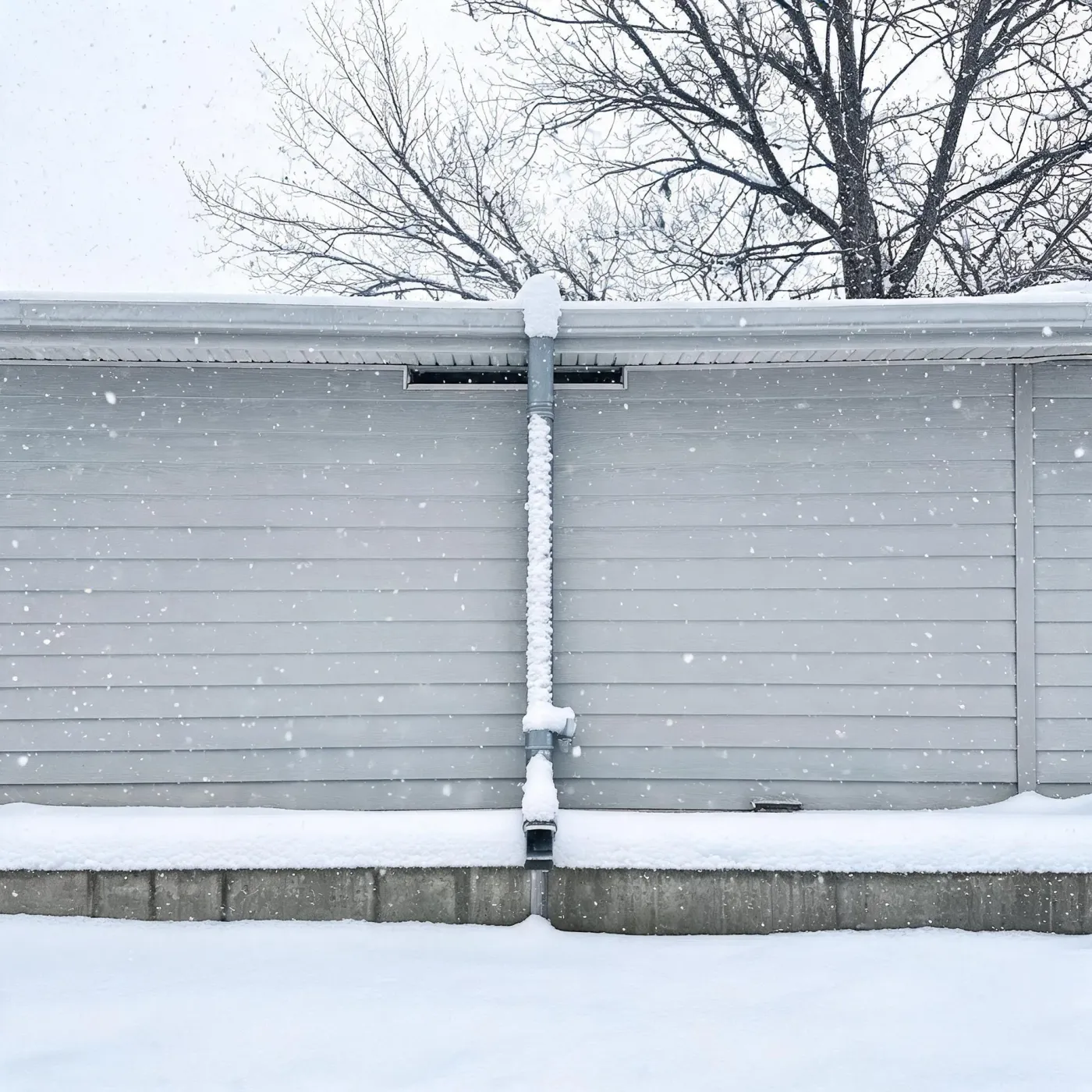
On the coldest nights here, the statewide average drops to 15°F, according to NOAA, and your furnace on oil heat answers by running close to nonstop to hold the house steady. That kind of long, steady run puts more hours on the heat exchanger than a milder night would, and more hours means more heating and cooling cycles on the metal. A crack already forming tends to show itself on nights like this, not on a mild one in October. If you're noticing soot, a strange smell, or a flame that isn't steady blue once it's been running for a while on a night this cold, that's worth having looked at rather than waited out.
NOAA nClimDiv 1991-2020 county normals weighted by homes




A cracked heat exchanger can let exhaust gases, including carbon monoxide, mix with the air your furnace blows through the house. That risk doesn't go away on its own and it doesn't improve with time.
A local contractor who works on oil furnaces all winter can confirm whether the exchanger is cracked and shut off the furnace safely if it is, before another cold night runs it again.
Walk past the furnace while it's running and take a breath. A cracked heat exchanger often has a smell to it, something sharp or formaldehyde-like, sometimes described as a hot metal smell that wasn't there before. Look at the burner flame through the viewing window. It should burn steady and blue. If it's flickering, leaning to one side, or turning yellow, that's worth noting. Some households notice soot building up on the furnace cabinet or nearby surfaces. Others notice headaches, nausea, or feeling unusually tired when the furnace has been running a while, and feeling better once they're outside or the furnace cycles off. With oil heat running long hours on cold nights here, any of these signs is reason to have the furnace looked at rather than waited out.
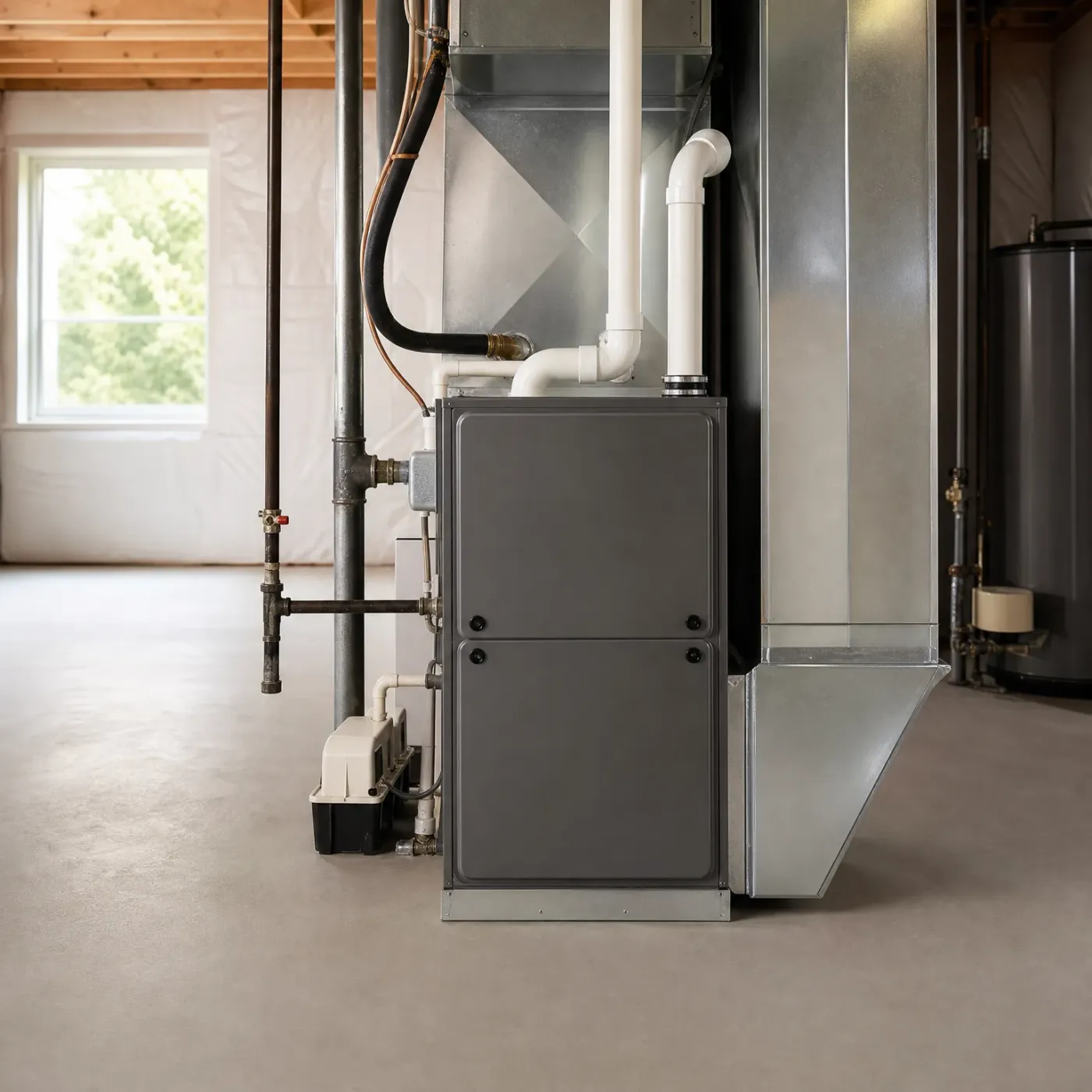
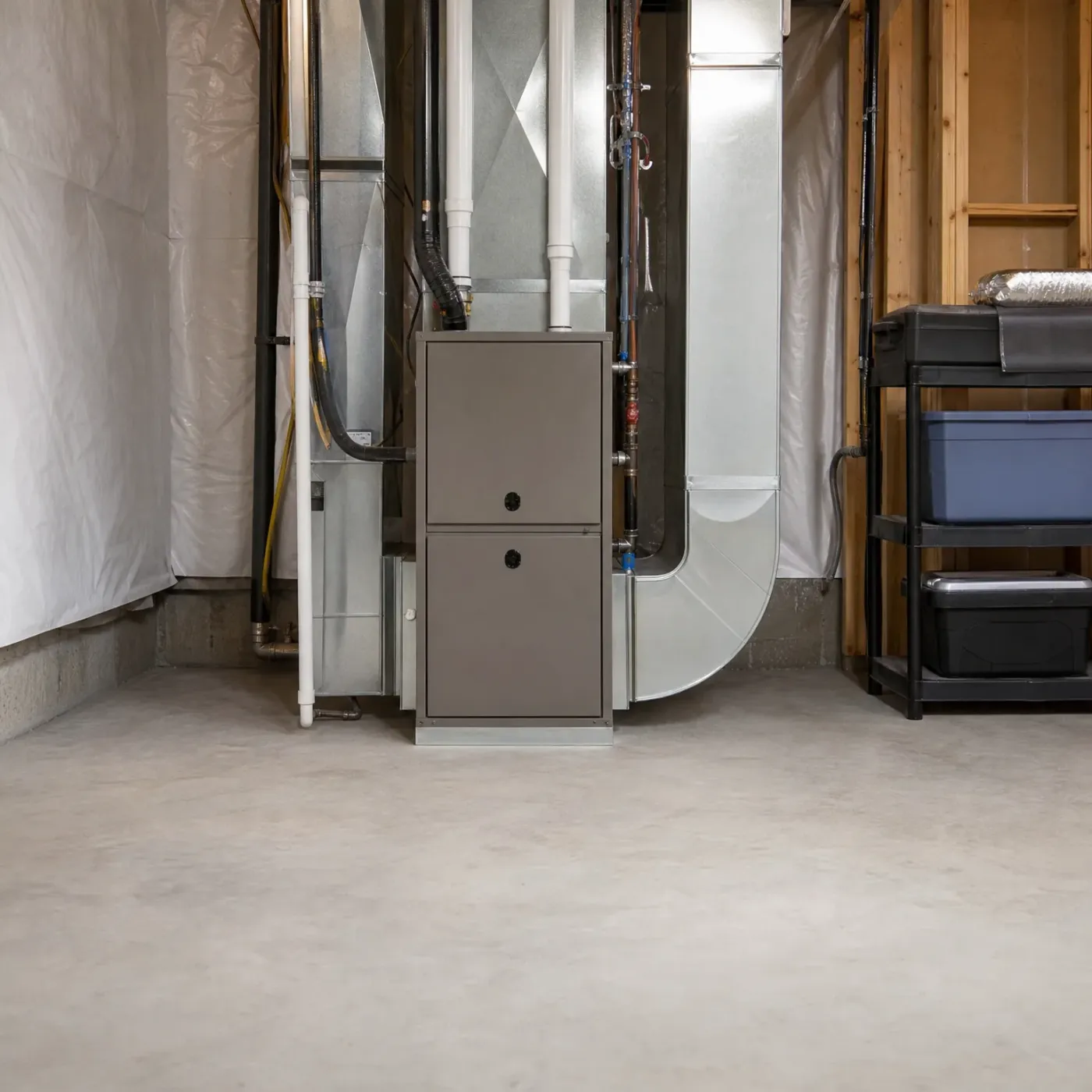
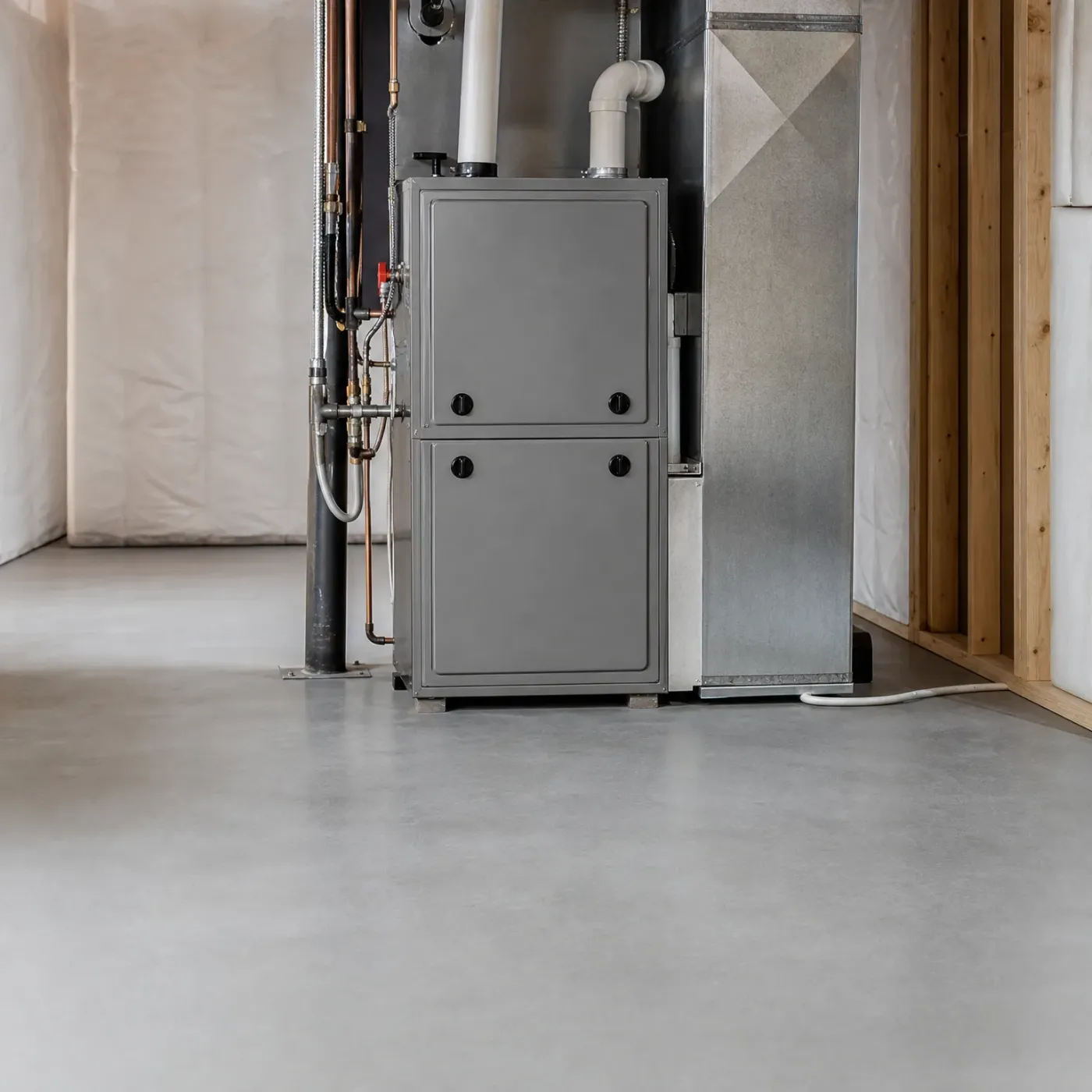
This is what a furnace in good shape looks like: steady blue flame, tight connections, no dust built up around the cabinet. Oil heat run through a system like this doesn't leave soot streaks or a burnt smell behind. The basement around it stays as it should, with no haze and no odor when the furnace kicks on.
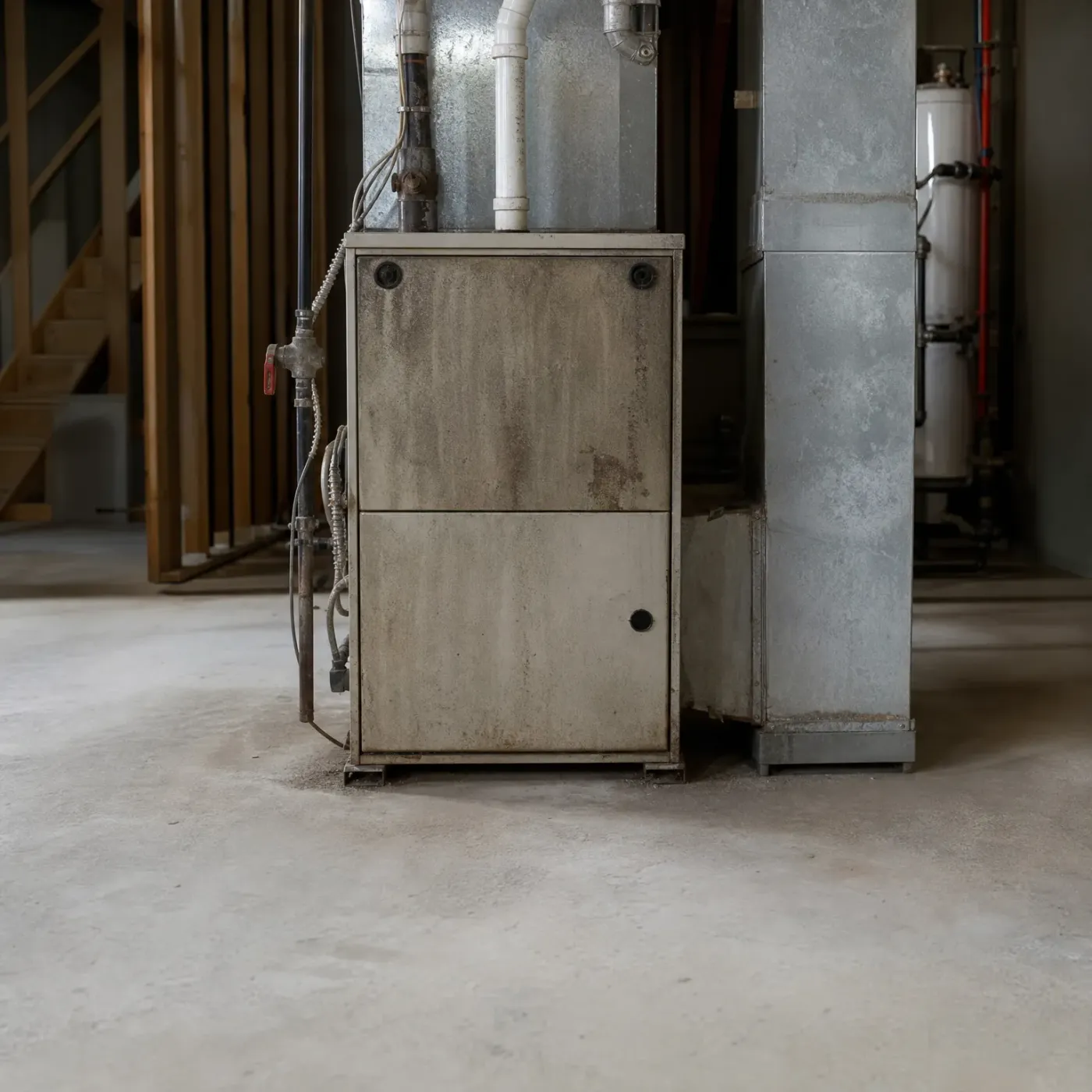
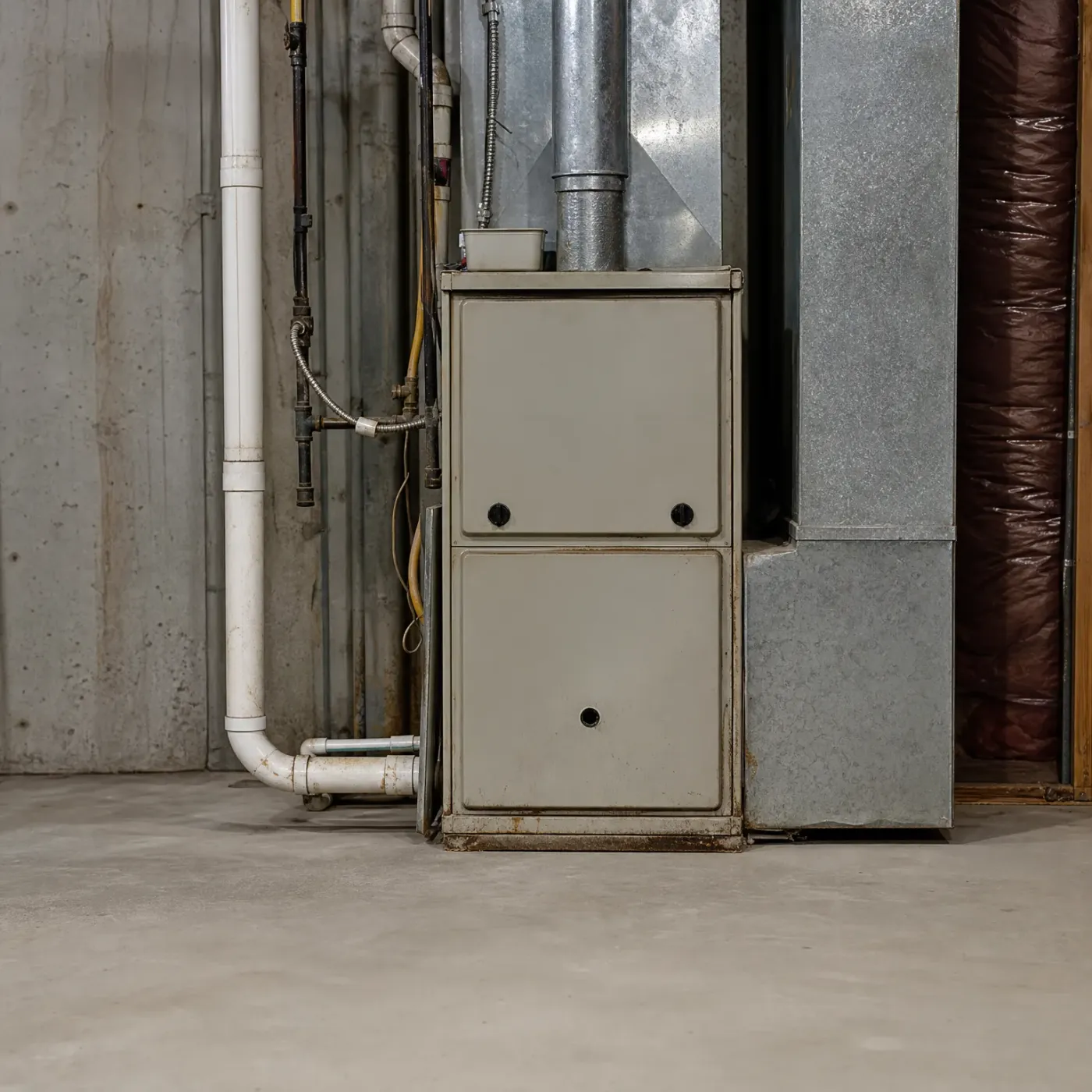
Dust and grime like this on an older furnace don't by themselves mean a cracked heat exchanger, but they're a sign nobody's had eyes on it in a while. Pull the panel and check for soot trails, rust around the burner, or a flame that bends and flickers instead of standing steady. That's what a contractor checks first.
You want to know why this is happening to your furnace specifically, not just that it can happen. Oil furnaces in New Hampshire run long hours on the coldest nights, and you're wondering if that's the cause, or if it's something about the furnace itself that led to a crack forming where the metal used to be solid.
The heat exchanger expands every time the burner fires and contracts every time it shuts off. On a cold night here, that cycle can happen many times between dusk and dawn. Each cycle flexes the metal a small amount, and over years that flexing wears a thin spot or a seam where the metal has moved the most. Eventually it gives way as a crack, usually at a joint or a bend where the stress concentrates. A furnace that short cycles, turning on and off more often than it should, puts the exchanger through this stress more times per season than one that runs in longer, steadier stretches. Rust from moisture sitting in the exchanger can thin the metal the same way from the inside.
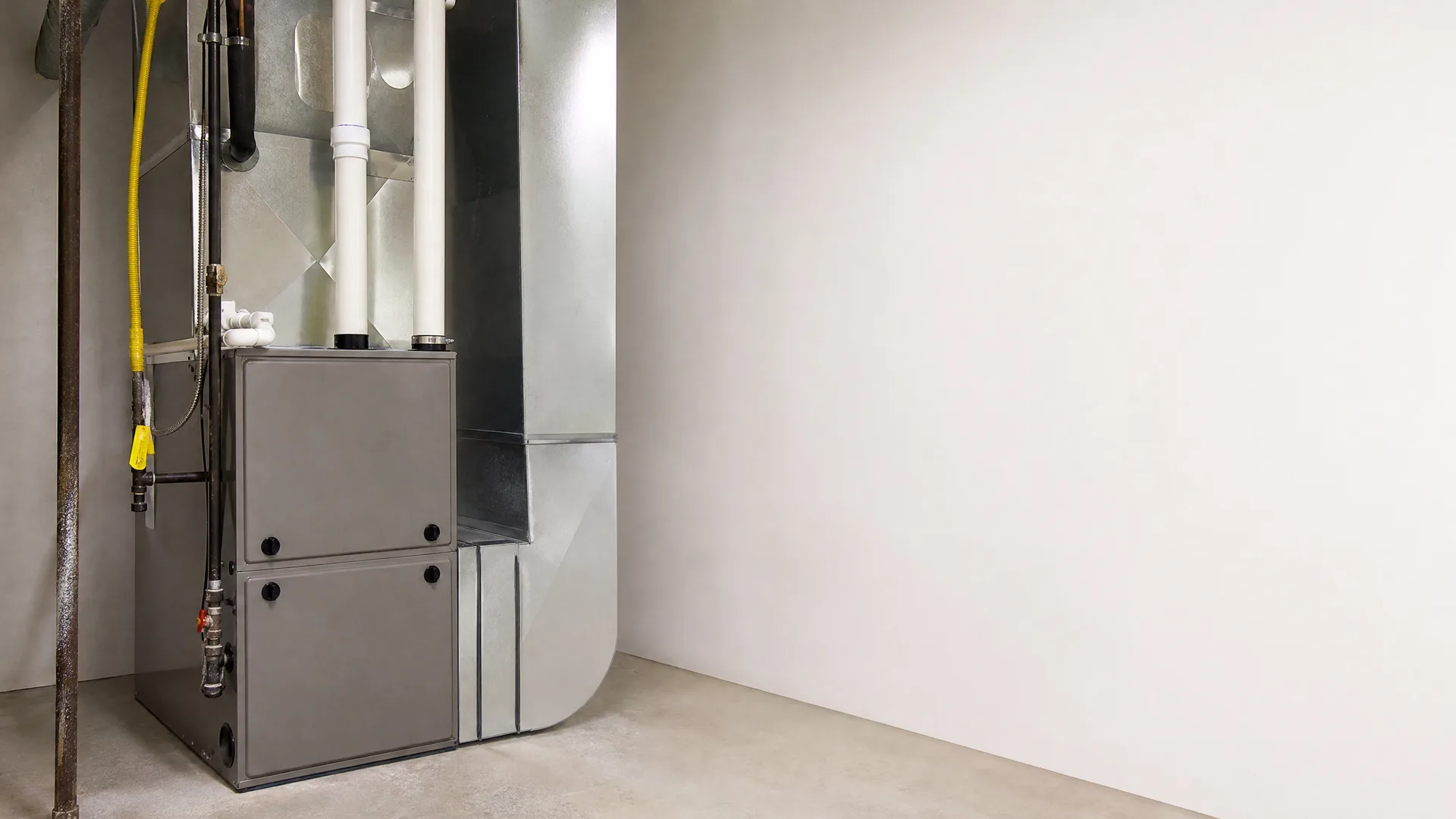
A heat exchanger is a thin metal wall separating the flame from the air blowing through your ducts. Every time the furnace fires up and shuts off, that metal expands and then contracts. Years of that movement, especially with the long oil furnace runs a New Hampshire winter demands, is what opens a crack along a seam or a weld. It isn't rust eating through from one spot. It's metal fatigue, the same way a paperclip snaps after enough bends.
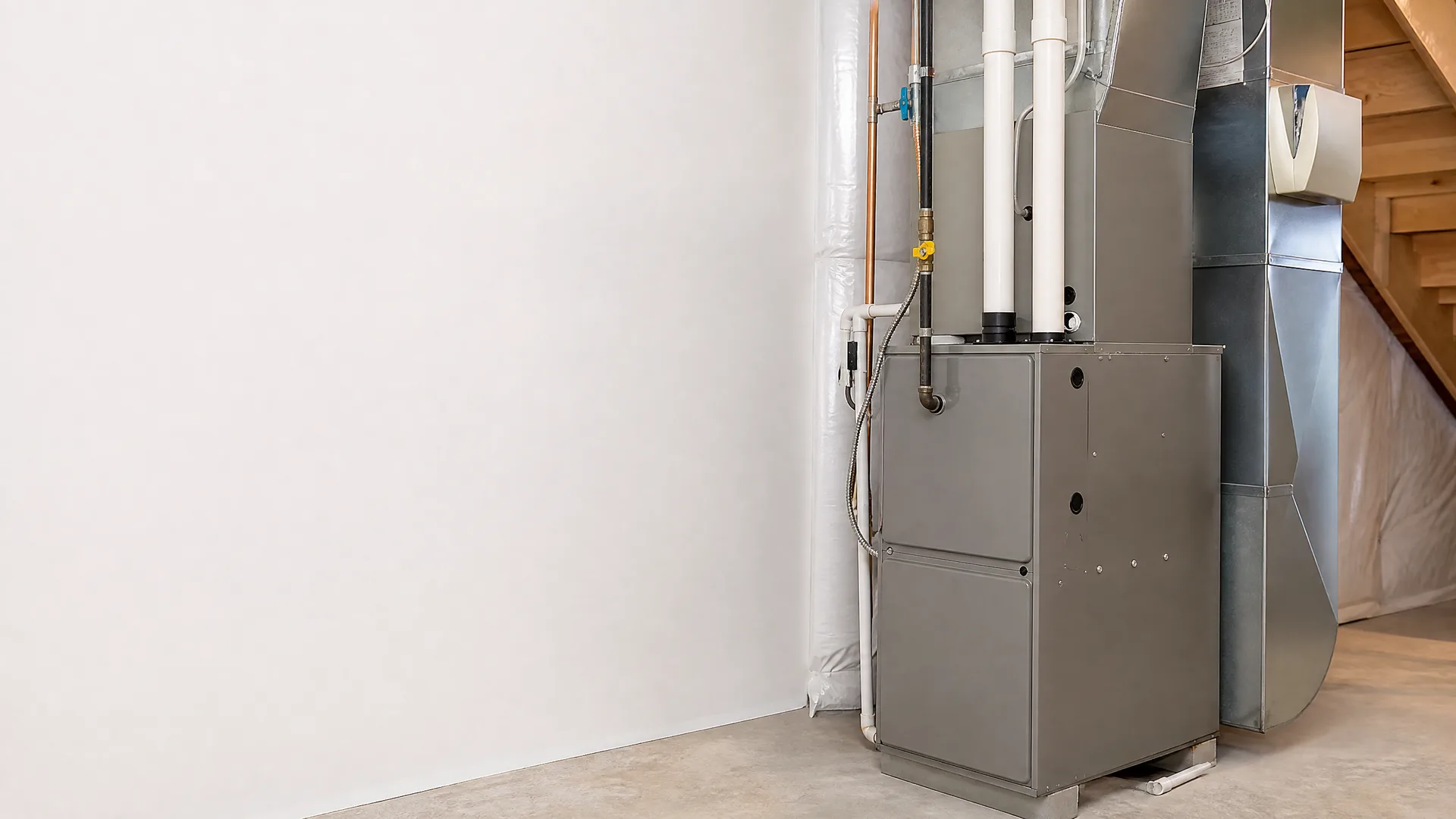
A crack doesn't have to be wide to be a problem. The pressure inside the exchanger changes depending on whether the blower is pushing air across it, and that pressure difference is what pulls exhaust through a crack that might only open under a draft. A contractor checking this won't just look at the metal. They'll run the furnace through a full cycle and watch how it behaves once the blower kicks on, since that's when a marginal crack tends to show itself.
At 15°F, your furnace isn't cycling on and off anymore. It's locked on, holding that flame against the heat exchanger for hours at a stretch. A crack already there only gets worse under that kind of steady heat.
NOAA nClimDiv 1991-2020 county normals weighted by homes
The burner fires and the flame heats the metal heat exchanger wall.
Air from the blower passes over the outside of that hot metal.
Heat moves through the metal into the air without the two mixing.
Exhaust gases exit separately through the flue to outside.


A crack in the heat exchanger isn't something to sit with while you decide. Oil heat in New Hampshire means long, hard runs on cold nights, and a furnace that's already compromised doesn't get better under that kind of load. What it needs is someone who looks at oil furnaces all winter and knows which parts of this system tend to go first and what a crack like this usually means for the rest of the unit. That's not a guess from a manual. It's someone local who has seen this exact furnace, running on this exact fuel, in houses like yours. Finding that person is usually the hard part, calling around, waiting on callbacks, explaining the same thing twice. Send the request and that work is off your plate. One local contractor gets it, matched to your furnace and your situation, and you go back to just waiting to hear what they find.
A furnace with a cracked heat exchanger can run for years before anyone notices, because the symptoms come and go with how long the furnace runs that day.
A furnace with a cracked heat exchanger can also stop working safely without warning, because the crack doesn't heal and the metal around it keeps getting weaker.
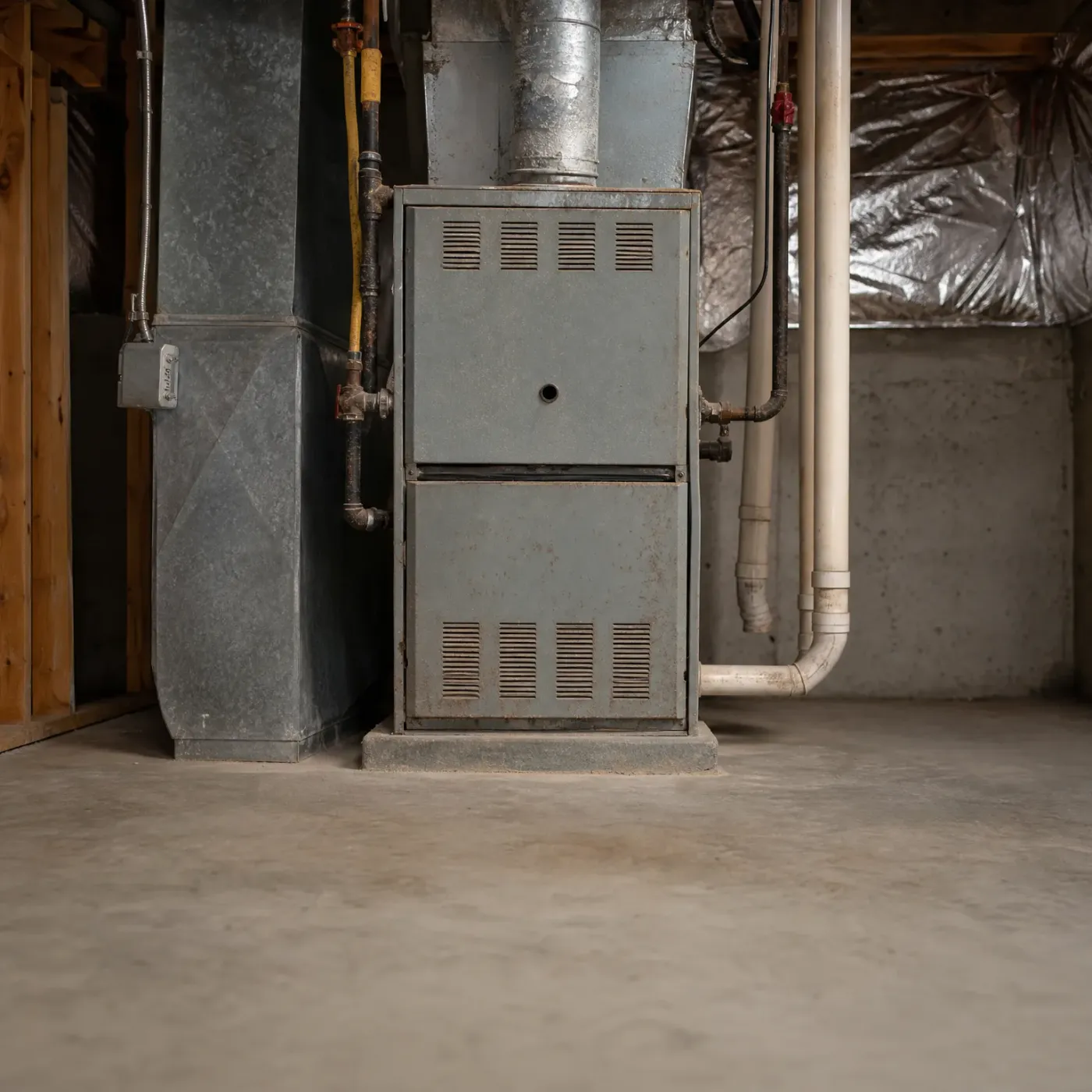
Finding a crack takes more than a flashlight. A contractor starts by running the furnace and watching the burner flame closely, because a crack changes air pressure inside the heat exchanger and the flame reacts when the blower turns on. From there, a pressure test or dye test checks the inside of the heat exchanger directly, since a crack can hide behind metal that looks fine from the front. Getting a real look often means pulling the burner assembly out, so the inspection covers surfaces you'd never see otherwise. For cracks too small to catch by eye, a camera scope run through the passages picks up hairline splits before they widen. None of this stops at the furnace cabinet either. Testing carbon monoxide levels at the supply ducts tells a contractor whether gas has already worked its way into the air moving through your house. Soot built up in an odd pattern, right where the metal has pulled apart, is often the first clue pointing a contractor toward the exact spot to check.
A cracked heat exchanger doesn't announce itself clearly. It's a flame that moves when it shouldn't, a smell that comes and goes, a headache tied to how long the furnace has been running. None of that settles the question on its own. Only a pressure test or a dye test inside the heat exchanger tells you for certain, and that's work for someone who's done it before, not a guess made standing at the cabinet door.
Your furnace doesn't get a break from the cold here. On the hardest nights it runs long and steady, and a crack that might sit quiet in a milder climate gets pushed harder in New Hampshire. Oil heat through a full winter means more hours on that metal wall than most places see, and more chances for a small problem to become the kind you can't ignore.
The contractor who takes this job is local, licensed, and worked through last winter on furnaces just like yours. He's seen where these cracks tend to start and what a failing one looks like under load, because he's checked for it before, not because he read about it. You'll hear from one contractor, not a handful, so you're not stuck explaining your furnace to three different people while you wait.
The flame, the smell, the headache. None of it goes away by waiting it out, and none of it gets better the colder it gets outside.



Your request goes to one pro, not a list of companies.
No charge to send it. You decide if you hire them.