
Signs your furnace won't last a New Hampshire winter

Tell a local repair pro what your furnace is doing.

Connect with a pro

A furnace that won't make it through a New Hampshire winter usually tells you first. Short cycling, where it fires up and shuts off in a few minutes, means the heat exchanger or a safety switch is already failing. Cold rooms far from the furnace, or a system that runs most of the day and still can't keep up when it's single digits outside, means it's lost capacity it won't get back. Yellow or flickering burner flame instead of steady blue points to a cracked heat exchanger or dirty burners, and that's not something to wait on. Rattling, booming on startup, or a burning smell that doesn't clear after the first few minutes of a cold start are the furnace telling you a part is going. If your furnace is already struggling in October or November, it has months of hard running ahead, and a breakdown in January means days without heat while parts get tracked down and installed in the cold.

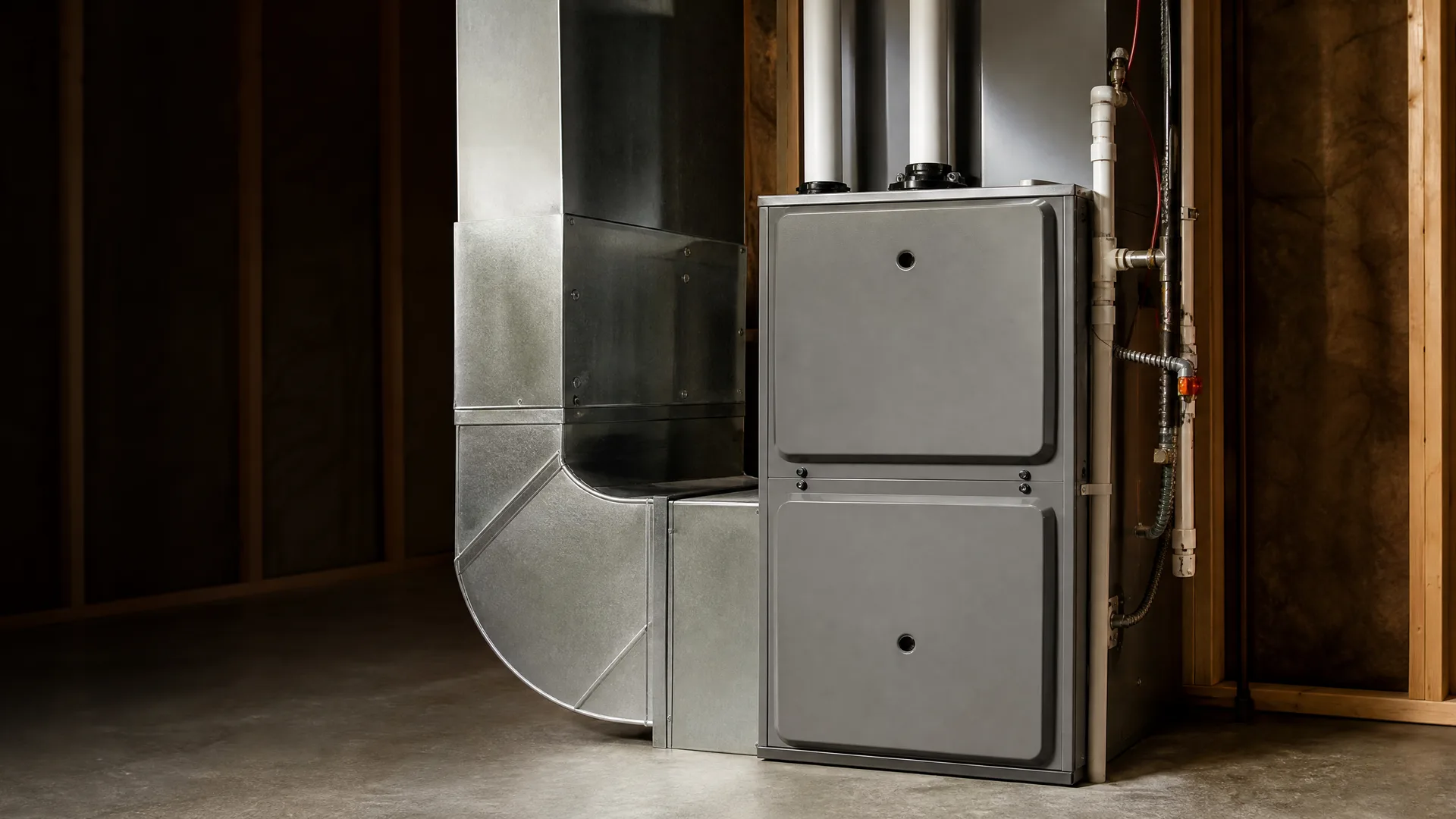
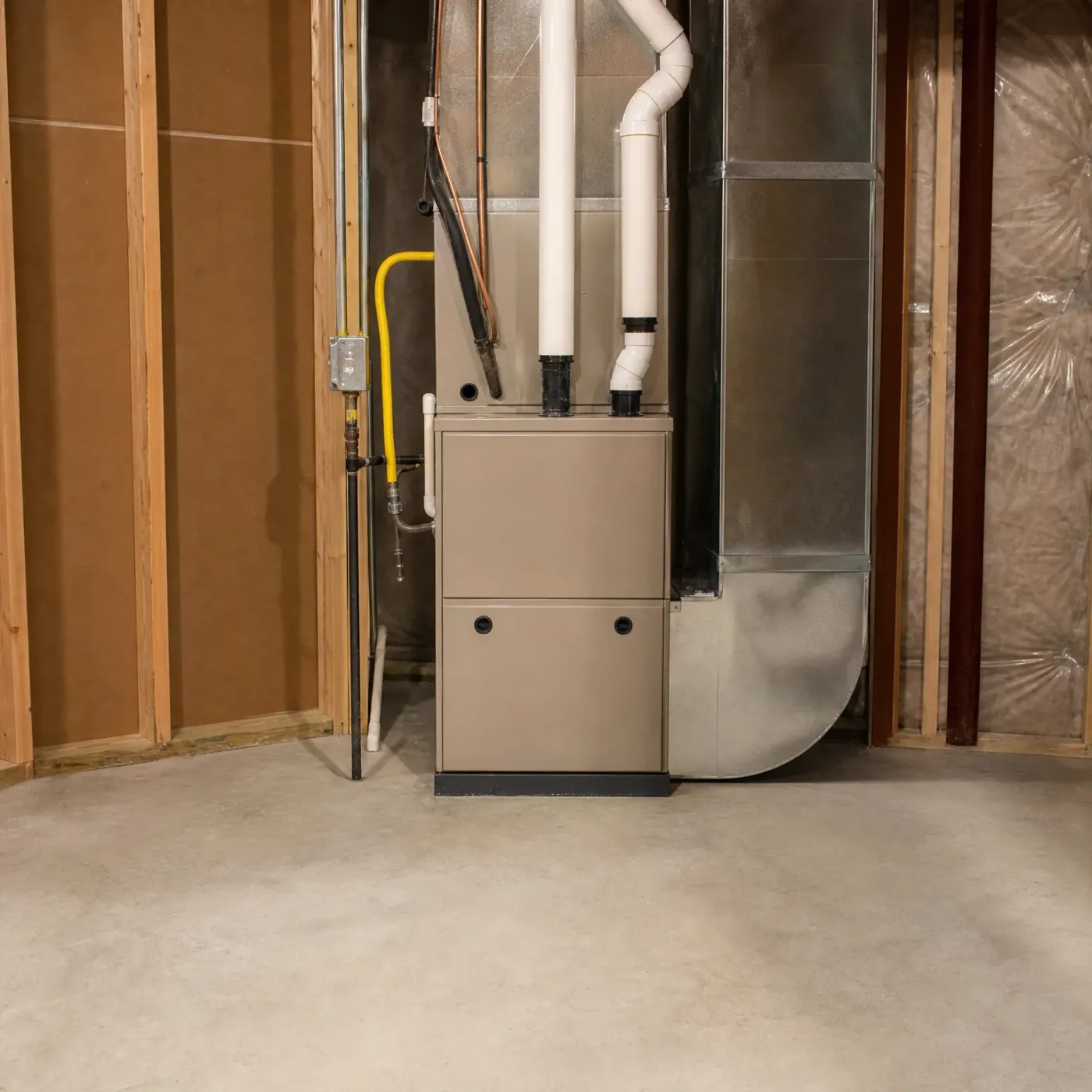
A beige high-efficiency furnace in an unfinished basement, with white PVC vent pipes, a yellow gas line, metal ductwork, and exposed wood framing on a concrete floor.

Running the way it should

A furnace in good shape holds a steady flame and a steady cycle. It warms the house evenly, from the basement to the farthest bedroom, and shuts off on its own once the thermostat is satisfied. The flue pipe stays clear, the burner sounds the same every time it fires, and the oil or gas use tracks with how cold it's been outside.
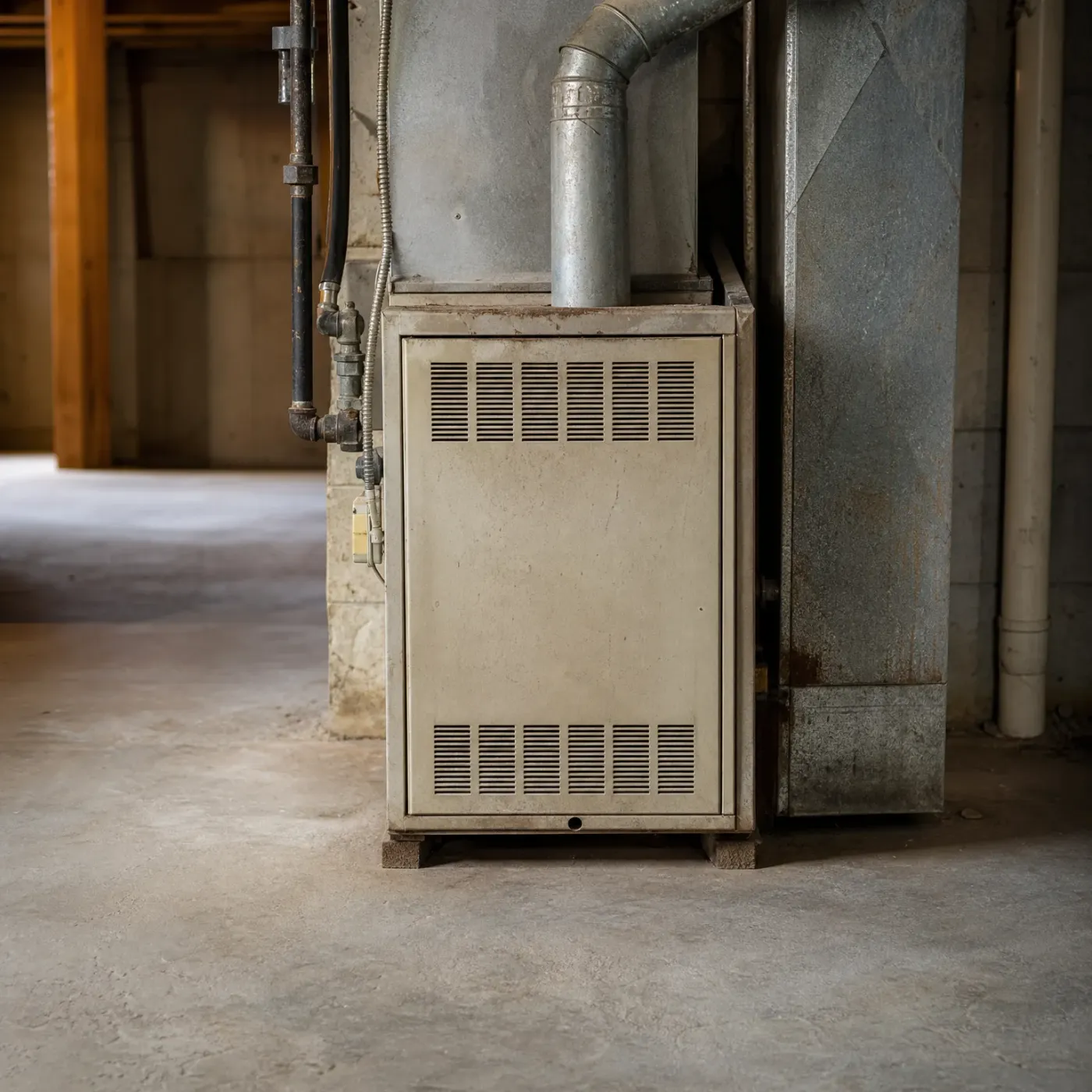
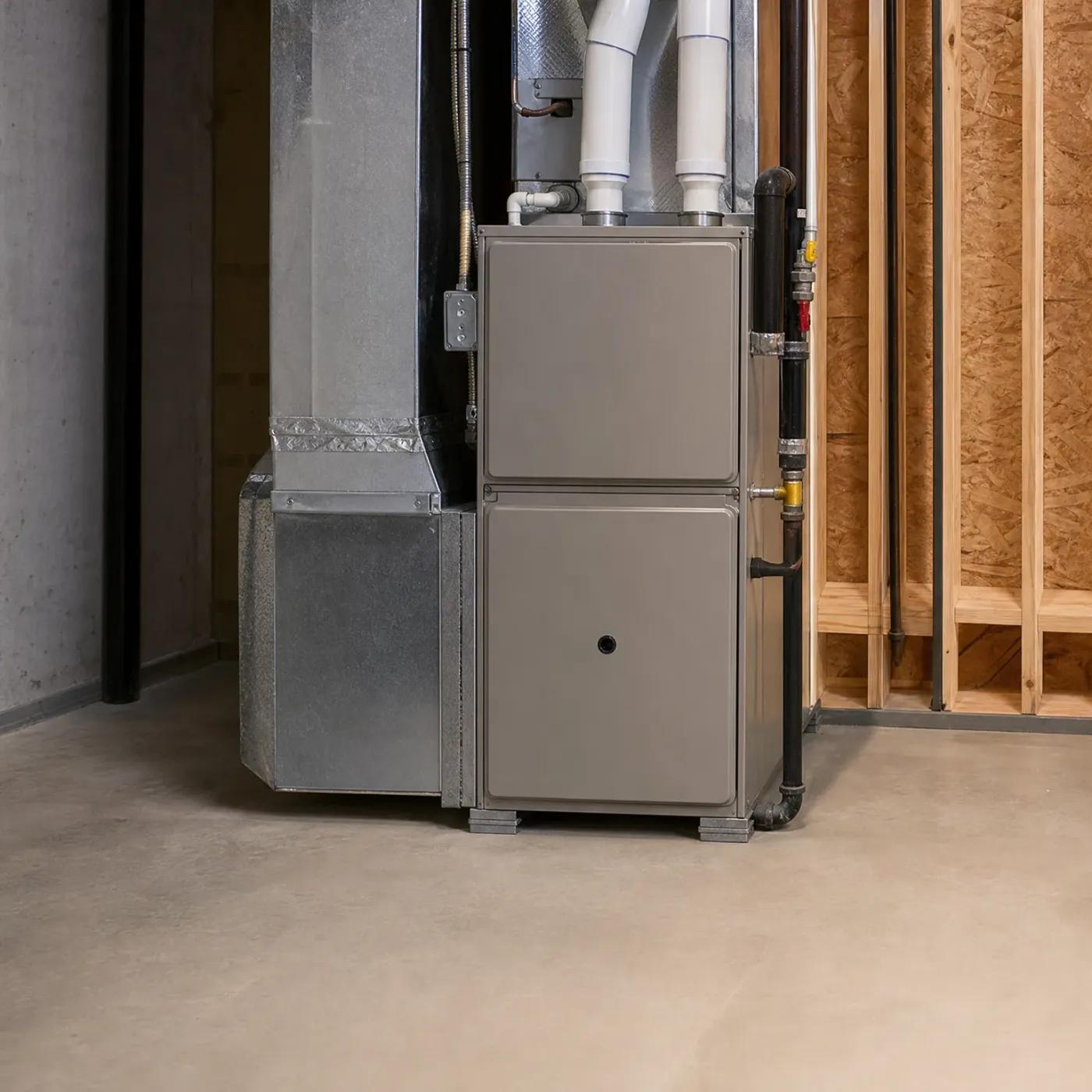
An older beige furnace with two louvered vent panels stands on a concrete basement floor, connected to galvanized ductwork and a metal flue pipe, with gas piping and flexible conduit on the wall behind.

Signs it's failing

An older furnace that's struggling shows it in how it runs, not just its age. It cycles on and off every few minutes, or it runs long and still leaves rooms cold. Soot around the panels, a yellow flame instead of blue, or a burning smell when it kicks on all point to a unit that may not hold through a New Hampshire winter.

Repair it or replace it

Call for repair

  • The furnace heats unevenly but still brings every room up to temperature within an hour or two.
  • It cycles on and off at a normal rate, maybe ten or twelve times a day once it gets cold.
  • You smell nothing unusual at the vents and the pilot or igniter lights on the first try, every time.
  • The furnace is doing what oil furnaces here cost a lot to run already, and a repair keeps that cost from climbing further.
  • A technician has been out before and the problem was a single part, not a pattern of failures.

Call for replacement

  • The furnace short cycles, firing up and shutting off again within a few minutes, no matter how cold it is outside.
  • Rooms farthest from the furnace stay noticeably cold through January and February even with the thermostat set higher.
  • You have called for repair more than once this winter, and each visit fixes a different part.
  • The flue or burner shows soot, or the furnace trips its safety switch and shuts itself off.
  • Oil use has climbed season over season without the house getting any warmer for it.
A gray high-efficiency furnace in a basement, connected to sheet-metal ductwork on the left and white PVC vent pipes above, with black gas and drain piping and an exposed wood-stud wall with OSB sheathing on the right.

Still doing its job

The burner lights on the first try and settles into a steady flame. Ductwork and gas lines run clean to the cabinet, and the PVC pipes venting out the top stay dry and tight. Nothing around the unit looks disturbed.

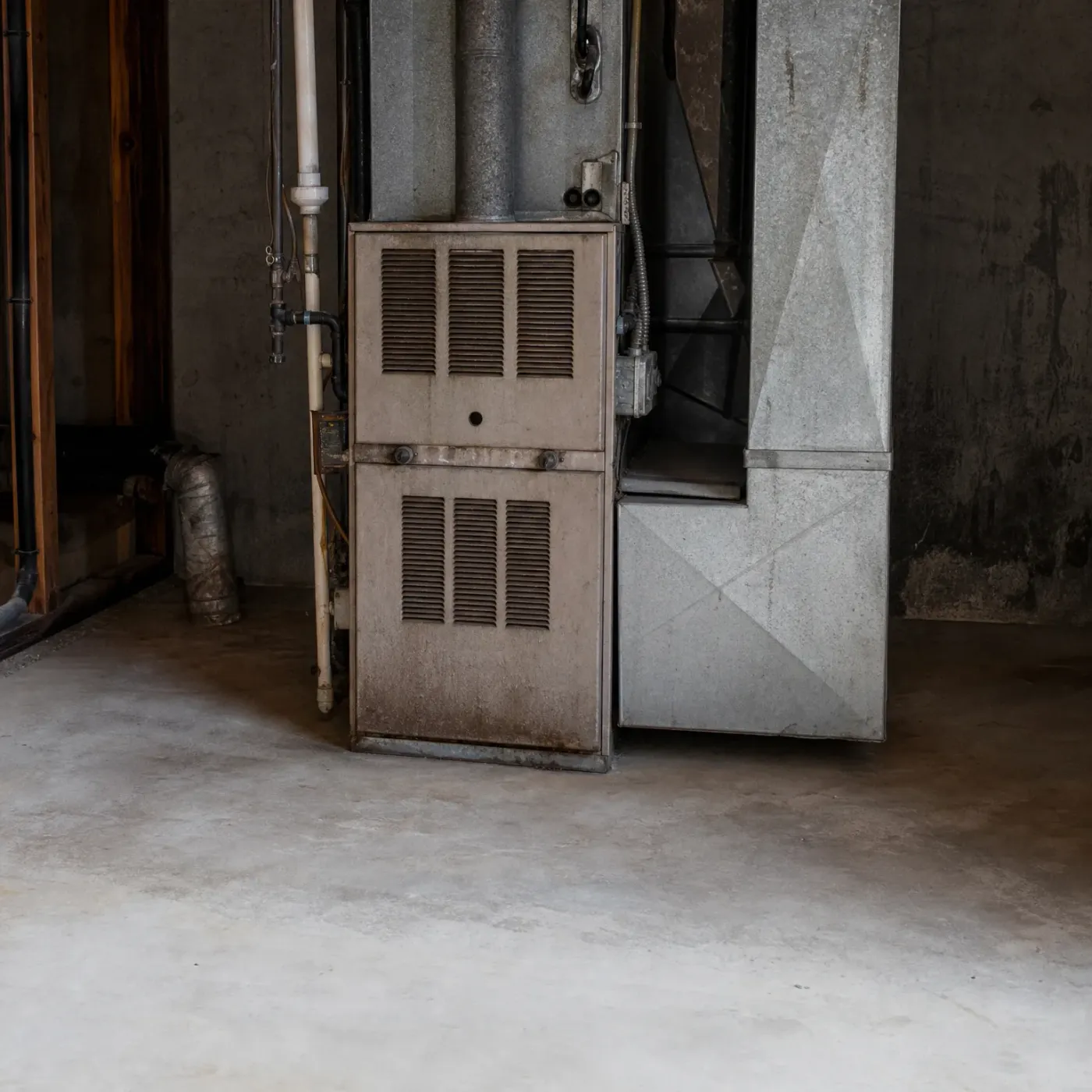
An older gas furnace with two louvered front panels stands on a concrete basement floor beside galvanized sheet-metal ductwork, pipes, and a weathered concrete wall.

Running on borrowed time

Rust creeps across the louvered panels and the concrete underneath shows moisture staining that was never there before. Copper lines alongside the unit have dulled with age. A furnace sitting in that kind of damp is one a repair tech needs to see before January.

A woman in a cream cowl-neck sweater sits by a window with snow outside, in a dimly lit living room with a sofa, lit lamp, mirror, candles and a fireplace.
A woman in a gray turtleneck sweater sits beside a large window looking out at snow-covered evergreen trees, in a dimly lit living room with a lit fireplace, lamps, couch and houseplant.
A woman in a cream turtleneck sweater stands beside a large window with snow-covered ground and bare trees outside, in a dimly lit living room with lamps, a sofa and framed art.
A woman in a grey cowl-neck sweater stands indoors near a window, looking out at falling snow, with a lamp, framed picture and couch in the warmly lit room behind her.

A furnace does not just turn on. It steps through ignition, proves it has a flame, runs the blower, then shuts down, and when something is wrong it almost always shows up at one of those steps. Oil furnaces here use a cad cell, a small eye that watches the burner and cuts it off if the flame looks wrong, even on mornings when the fire is burning fine. Gas furnaces rely on a flame sensor instead, a thin rod that can get coated or cracked, and when that happens the gas valve closes within seconds of lighting. Before any of that, the inducer motor has to pull exhaust out through the flue, so a motor losing strength can leave the burner unable to light at all on a cold morning. Inside the cabinet, a limit switch is watching cabinet temperature and will cut power to the burner if a dirty filter or a blocked duct lets things run too hot. And behind all of it sits the heat exchanger, the chamber that keeps burning gas or oil separated from the air headed into your rooms. A crack there does not always stop the furnace from running. It just stops doing the one thing that matters.

How a furnace actually fails

  • A furnace stages through ignition, flame sensing, blower delay and shutdown in that order, and a failure usually shows up at one of those steps first.
  • The flame sensor is a thin metal rod in the burner compartment that proves a flame is lit, and a coated or cracked one causes the gas valve to shut within seconds of ignition.
  • Most oil furnaces here have a cad cell, a light sensitive eye that watches the flame and locks out the burner if it reads the fire wrong, even when the fire is fine.
  • The heat exchanger is the metal chamber that separates burning gas or oil from the air blown into your rooms, and a crack there lets exhaust mix into that air.
  • A limit switch cuts power to the burner if the air inside the cabinet gets hotter than it should, which happens when a dirty filter or blocked duct restricts airflow.
  • The inducer motor pulls exhaust out through the flue before the burner is allowed to light, so a weak one delays or blocks ignition on cold mornings.
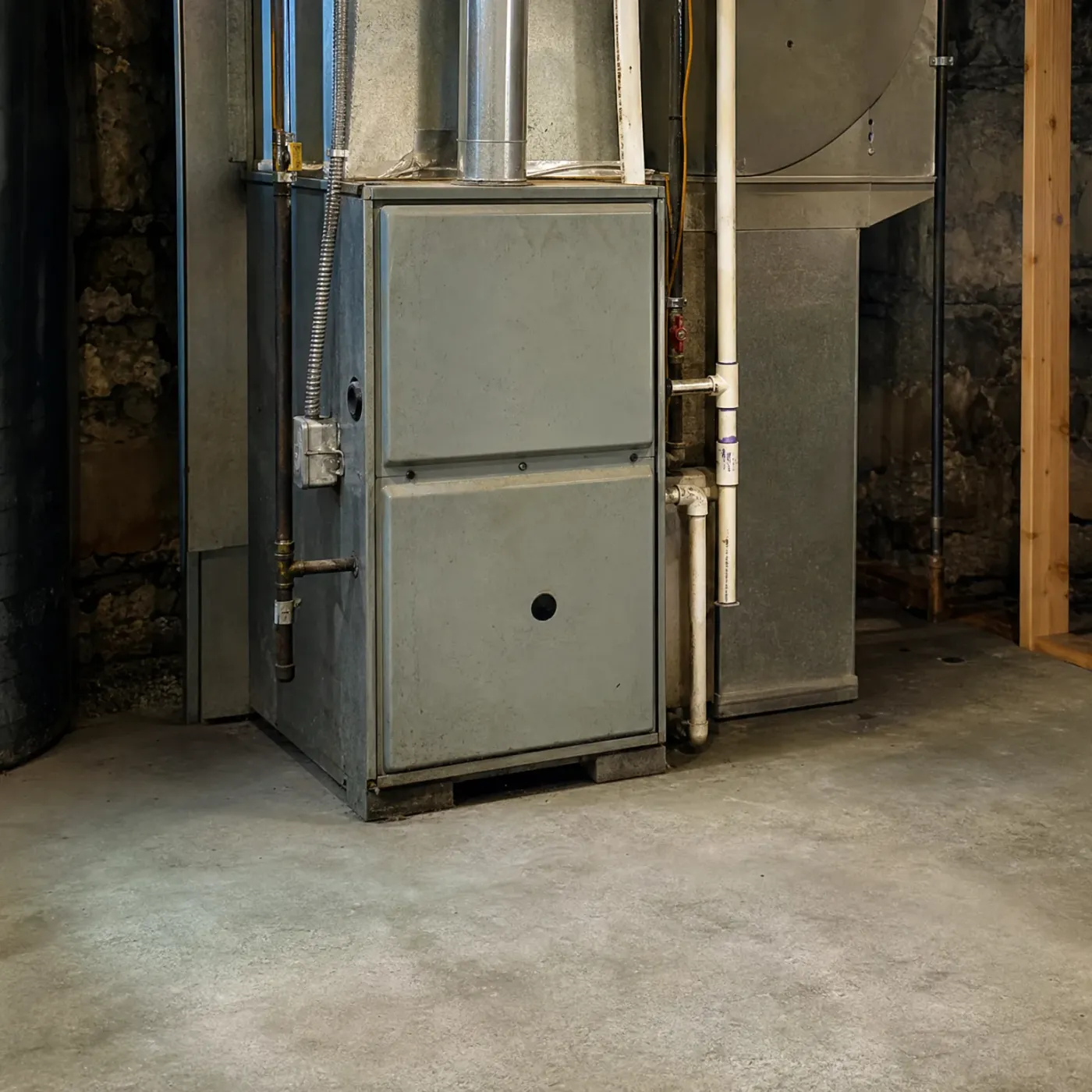
A gray sheet-metal furnace with flue pipe and adjacent ductwork stands against a stone basement wall on a concrete floor, with white PVC and metal pipes running nearby.
Before you get your furnace repair
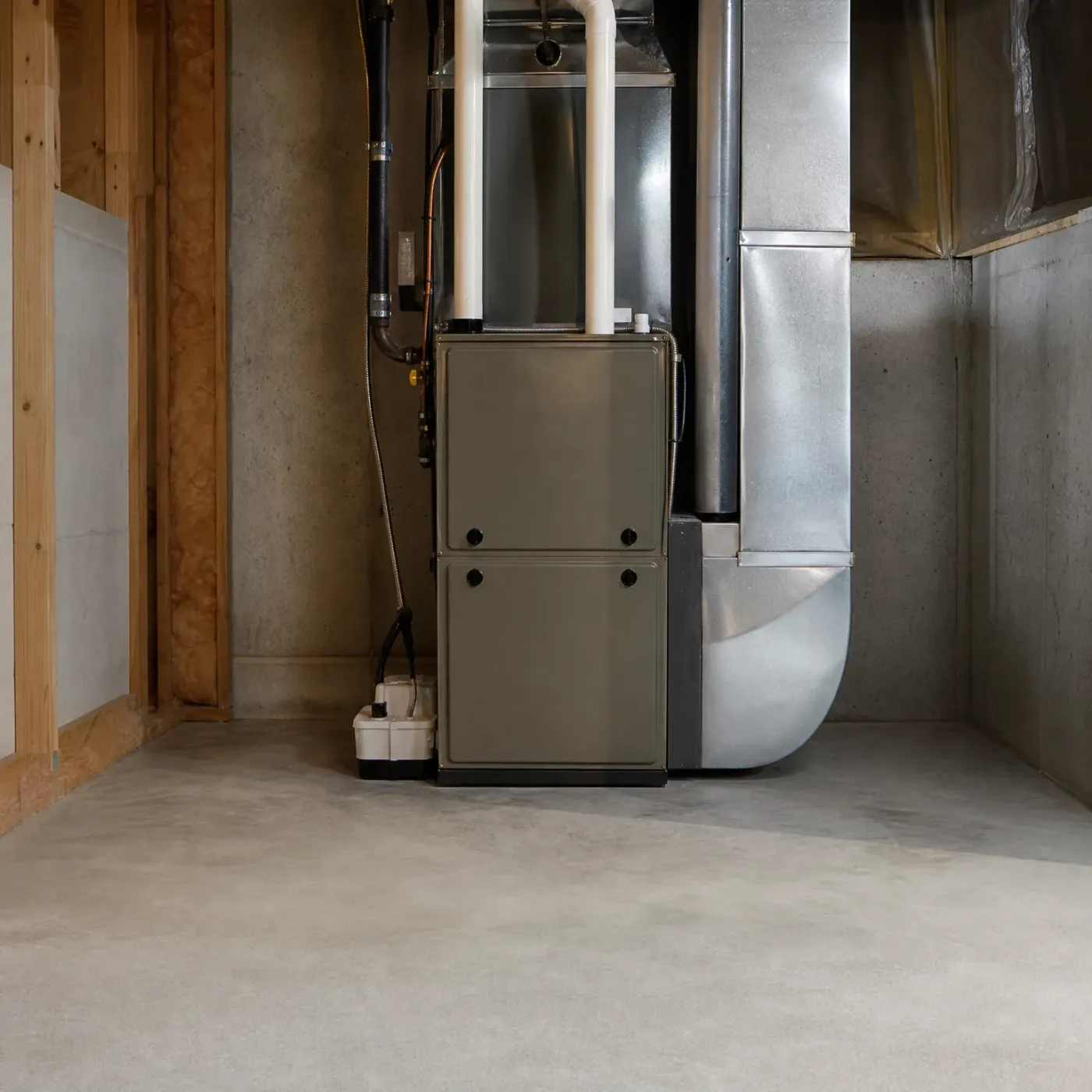
A gray high-efficiency furnace with white PVC vent pipes stands against a concrete basement wall beside sheet-metal ductwork, a small condensate pump on the floor, and exposed wood framing at left.
After you get your furnace repair

Get your furnace to the right pro

A furnace that's failing in January doesn't wait for a convenient time, and most of New Hampshire still leans on oil heat with electricity rates that make running space heaters as a stopgap a bad trade. If you've seen the short cycling, the cold bedroom down the hall, or the smell at the vents, you already know the furnace is on borrowed time. What you don't need right now is the hunt: searching contractor listings, calling two or three shops, explaining the same symptoms each time, then sitting on quotes trying to tell which one actually looked at the problem versus which one is guessing. That's the part worth handing off. Getting matched with a contractor who works on furnaces like yours, in a county that drops well below freezing for months at a stretch, means one call explaining it once, not five. The furnace still has to get fixed. But you don't have to spend the next cold snap figuring out who should do it.

What the heat exchanger does

The heat exchanger is the metal chamber that separates the burning gas or oil from the air moving through your ducts. Heat passes through its walls into that air, and the exhaust leaves through the flue. Years of heating and cooling cycles make the metal expand and contract, and eventually it cracks. A cracked exchanger can let exhaust mix into the air your furnace is pushing through the house, which is why a furnace past that point gets condemned rather than repaired. It's also why a furnace that's cycling oddly or smells off in January is worth checking before the cold snap that really tests it.

Why oil furnaces age differently

Most furnaces in New Hampshire run on oil, and oil burners carry their own wear points beyond the heat exchanger. The nozzle that atomizes the fuel wears down and sprays unevenly, which shows up as a rougher flame and more soot inside the combustion chamber. That soot buildup cuts efficiency and can foul the cad cell sensor that watches for flame. A furnace with a few years of heavy soot behind it is working harder to produce the same heat, and that extra strain is often what pushes a marginal part past the point where it can get through a full winter.

Winter nights average 15°F statewide

At 15°F, a furnace that's lagging doesn't have much room to make up ground overnight. If yours is cycling longer or struggling to get rooms up to temperature, those cold hours are where it shows first.

NOAA nClimDiv 1991-2020 county normals weighted by homes

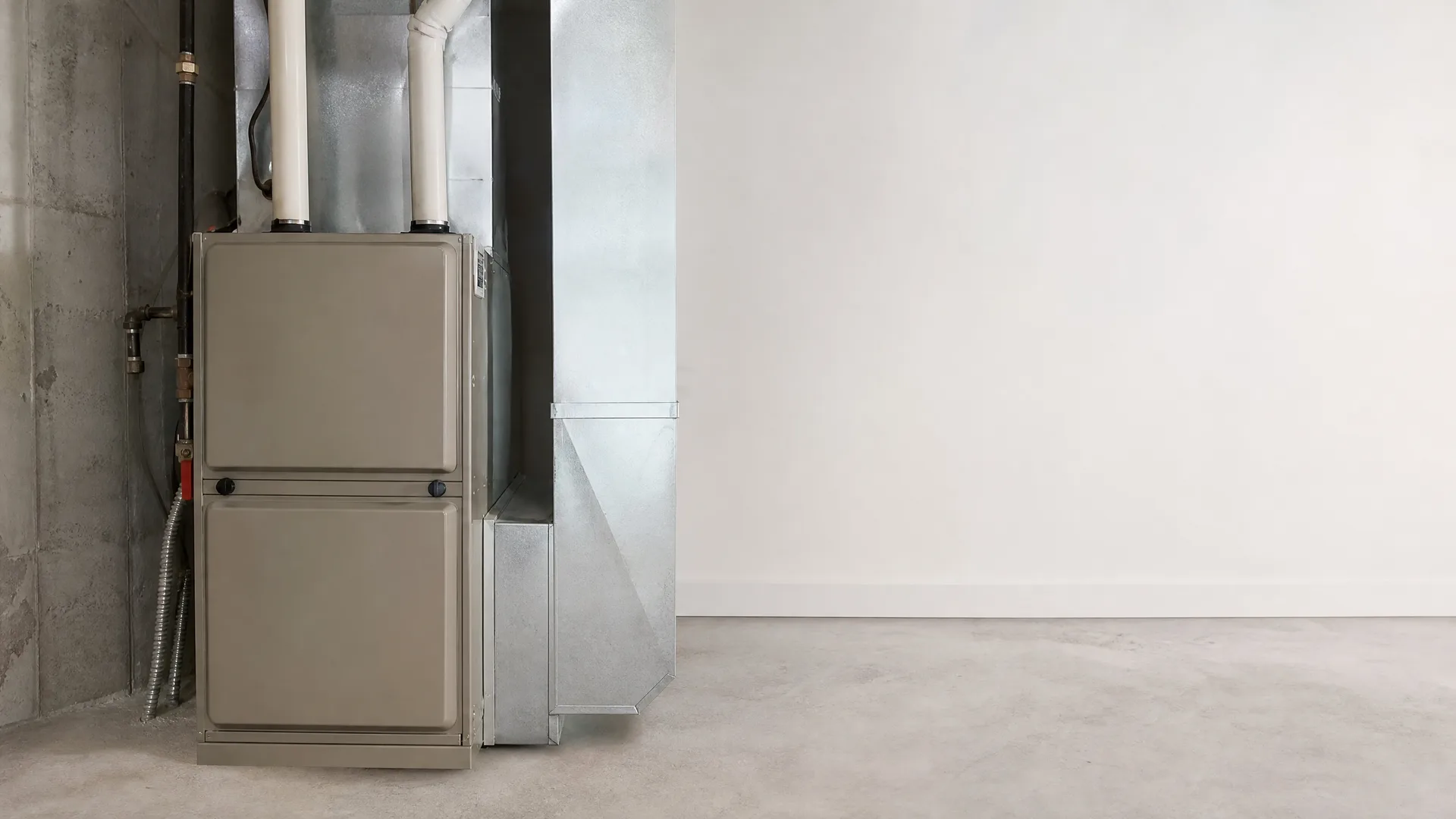
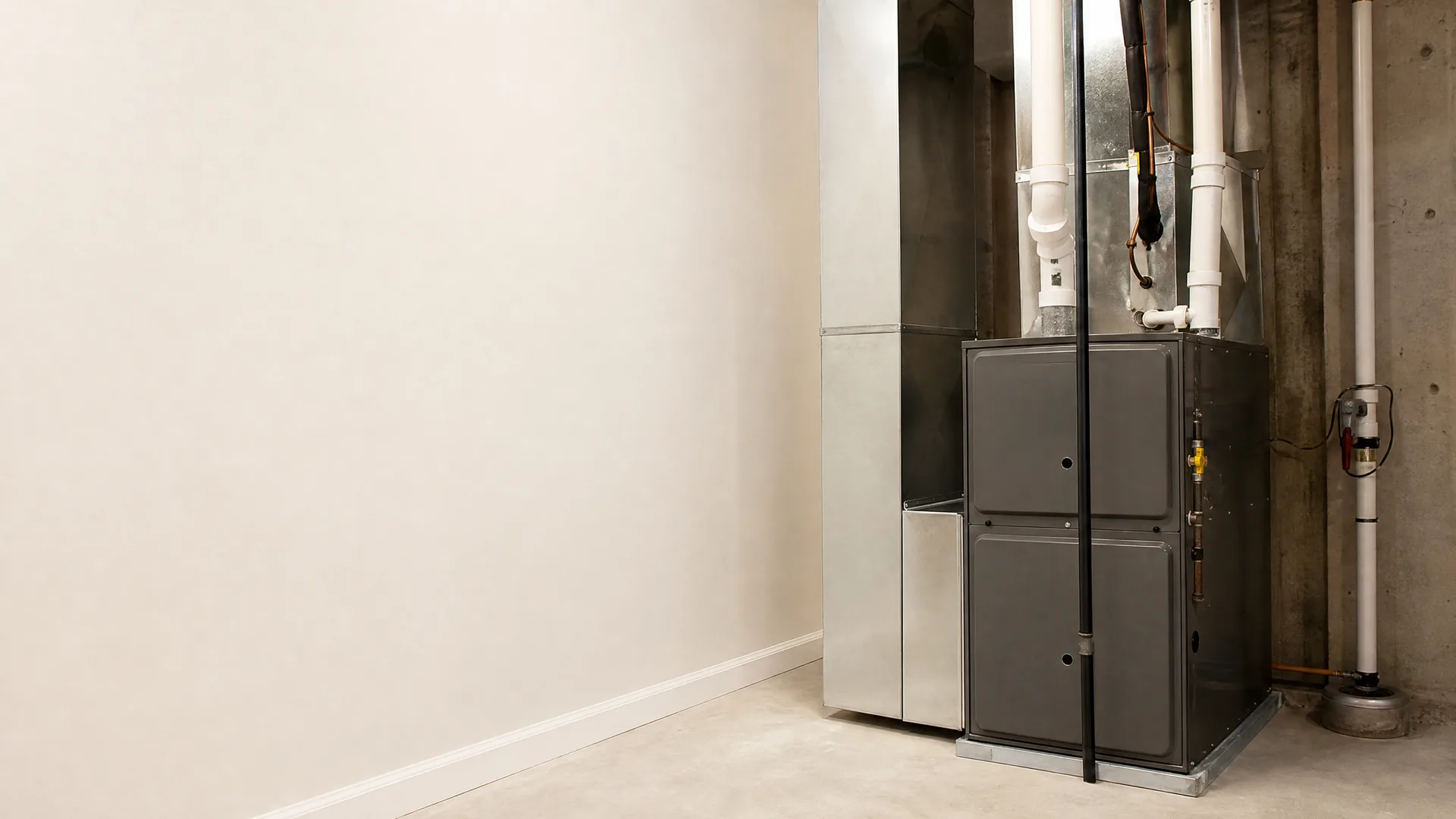
A beige high-efficiency furnace with two white PVC pipes stands beside sheet-metal ductwork and a concrete wall in an empty basement with a bare light-colored wall and concrete floor.

What a failing furnace costs you in oil

An oil furnace that's lost efficiency burns more fuel to hold the same temperature, and you'll see it in deliveries that run out sooner than they used to. If you're filling the tank every few weeks instead of every month or so, that's not just winter being colder. A furnace working harder to make up for a cracked heat exchanger or a weak igniter is spending oil to fight itself, and at New Hampshire's prices that adds up fast.

A gray furnace with sheet-metal ductwork and white PVC vent pipes stands in the corner of a finished basement room with a blank beige wall and concrete floor.

What happens if it quits in a cold snap

New Hampshire winters don't give you a warm stretch to wait out a repair. If your furnace goes down on a night at 10 below, pipes along outside walls can freeze within hours, and a frozen pipe can split and flood a basement before anyone notices. A furnace already showing warning signs, the short cycling, the cold back bedroom, the rattling blower, is one cold snap away from leaving the house with no backup.

Why does my furnace smell like burning when it kicks on?

You turn the heat on after it's been running all winter and catch a sharp, burning smell at the vents for a minute or two. It worries you enough to check whether something's actually wrong or if it's nothing. With an oil furnace working hard through a New Hampshire winter, you want to know which smell is normal dust burning off and which one means a part is going bad.

A quick burning smell that fades in a few minutes is usually dust on the heat exchanger. One that lingers, or smells like oil, plastic or something electrical, is not.

Dust settles on the heat exchanger and burner compartment when the furnace sits idle between cycles. The first time it fires, that dust burns off and the smell clears once the air moving through the ducts has cycled it out. An oil smell that keeps coming back usually means a burner isn't combusting cleanly, often from a clogged nozzle or bad ignition. A sharp, acrid or plastic smell points to a motor winding or a wire insulation getting too hot. Either one is worth having checked before the next cold stretch, since a furnace running through a New Hampshire winter doesn't get many easy breaks to catch a developing problem.

A bearded man in a blue and brown plaid flannel shirt stands indoors looking out a window at snow-covered trees, with a ceramic mug on the windowsill.
A man in a blue T-shirt sits on a light gray sofa, laughing while looking at an open laptop in the foreground, with a framed picture, lamp and potted plant behind him.
Exterior wall of a building with gray horizontal siding, a metal downspout at center, and a concrete block foundation, with snow on the roof edge, ledge, and ground, and bare trees against an overcast sky during falling snow.

Winter nights average 15°F across New Hampshire, according to NOAA climate data. That's the stretch where a weak furnace falls behind and can't catch up before morning. A unit in good shape holds the house steady even when it's that cold outside. One that's struggling runs longer each cycle, and the room farthest from the furnace starts feeling it first, a few degrees cooler than the thermostat says it should be. If you're reaching for a blanket in a room that used to feel fine, or the furnace seems to run most of the night without much of a break, that's the cold doing what it does to a system that's already losing ground.

NOAA nClimDiv 1991-2020 county normals weighted by homes

A woman stands in the open front doorway of a single-story house with stone and wood siding while a man in a dark polo shirt and cap walks toward it along a concrete path.

The signs don't go away on their own

A furnace that's short cycling, running cold in the far bedrooms, or smelling wrong at the vents is telling you something about this winter, not some winter down the road. None of that fixes itself once the cold settles in for good. The furnace either gets looked at or it keeps losing ground on the nights you need it most.

You don't have to figure out which part it is before you do anything about it. Getting matched with a contractor who knows oil furnaces and New Hampshire winters means you explain what you're seeing once, to someone who can act on it, instead of working the phone yourself trying to find somebody who'll even come out before the next cold snap. They'll reach out to you directly once you're matched. From there it's between you and them, on your schedule, not spent chasing quotes from people who may not call back.

A dark ceramic mug on a round wooden table beside a light grey sofa with a woven cushion and knit throw, with a window, potted plant, floor lamp and wooden cabinet blurred in the background.
A gray high-efficiency furnace with two white PVC vent pipes stands in an unfinished basement beside galvanized sheet-metal ductwork, with insulated wood-framed walls and piping behind it.

The right pro for this job

Step 1 of 3: Equipment