



Why your furnace makes a banging noise in New Hampshire

Step 1 of 3: Equipment

A banging noise when your furnace starts is usually a delayed ignition. Oil or gas builds up in the burner chamber for a second or two before it lights, and when it finally catches, it ignites all at once instead of a smooth, even flame. That small explosion is what you hear as a bang. It often points to a dirty burner or a nozzle that needs cleaning, since most furnaces in New Hampshire run on oil, and oil nozzles clog with use. Banging that happens as the system shuts down can mean something different, like a blower wheel coming loose or ductwork expanding and contracting. Either way, it is not a noise to leave alone. A furnace that bangs is forcing its parts to absorb stress they were not built for, and that wears them out faster. Getting a qualified technician to look at it before winter settles in is the safest way to know which one you are dealing with.

A gray-haired man in a dark long-sleeve shirt sits on a gray sofa in a living room, looking toward a sunlit window with sheer curtains.
A gray-haired man in a dark green sweatshirt sits on a sofa in a living room, looking toward a bright window, with a houseplant, lamp, fireplace and framed art behind him.
A gray-haired bearded man in a dark green collared sweater sits on a sofa in a living room with a window, houseplant, floor lamp and bookshelves, looking off to the side.
A gray-haired man in a dark green sweater sits on a sofa in a sunlit living room, looking off to the side, with a framed landscape painting, dining table and shelving behind him.

Is this bang loud enough to worry about?

You'll hear it right when the burner kicks on, a hard thump from inside the cabinet, sometimes enough to rattle the ductwork overhead or make you check what fell. It might happen every cycle or only on the first start of the morning. Some homeowners also notice a puff of odor near the vents right after, or soot staining around the burner door when the panel comes off. A single light bang now and then isn't an emergency. But if it's getting louder, happening every time the burner fires, or leaving soot behind, the ignition delay is getting worse, and on oil equipment that usually means the nozzle, electrodes or burner assembly need a look before the stress cracks the heat exchanger.

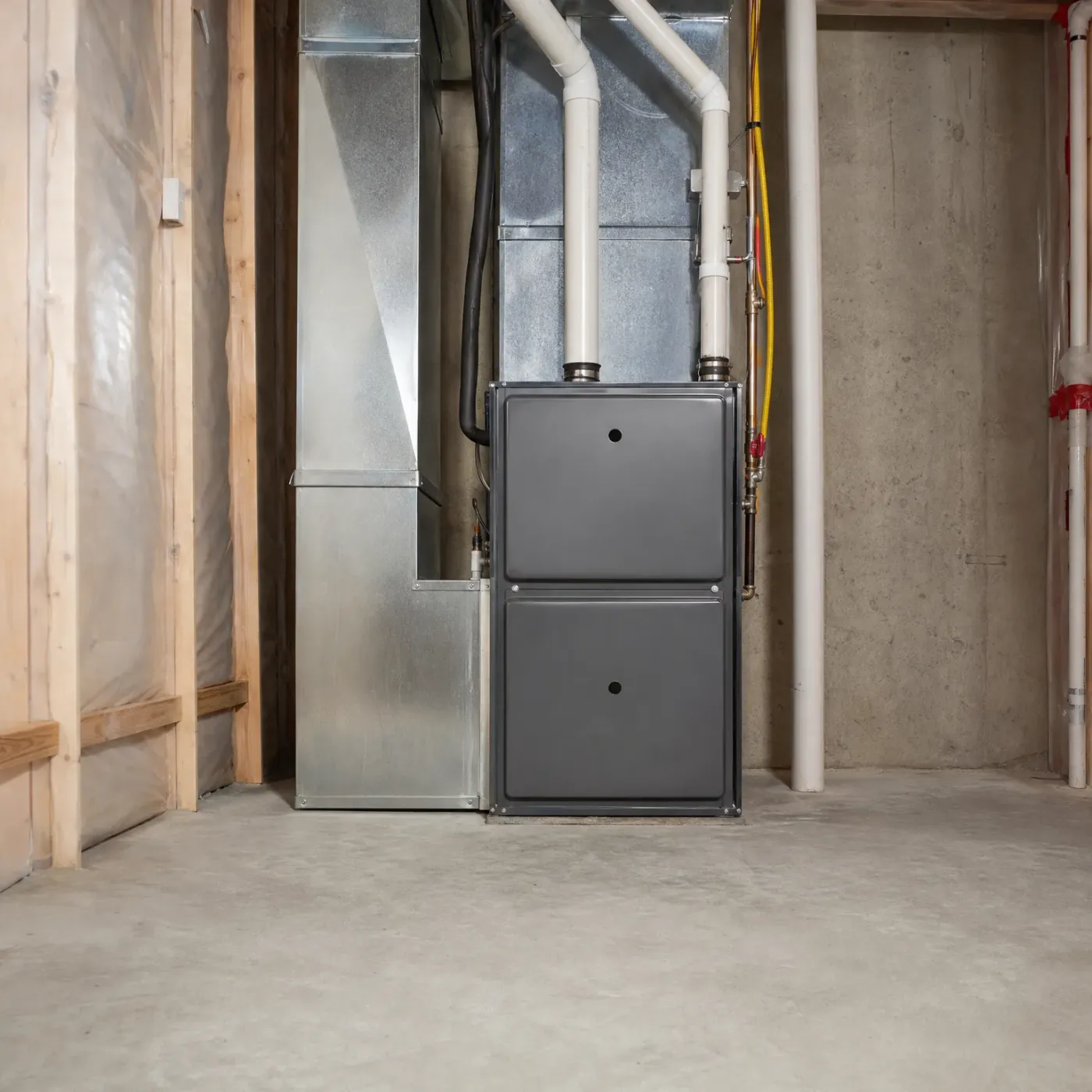
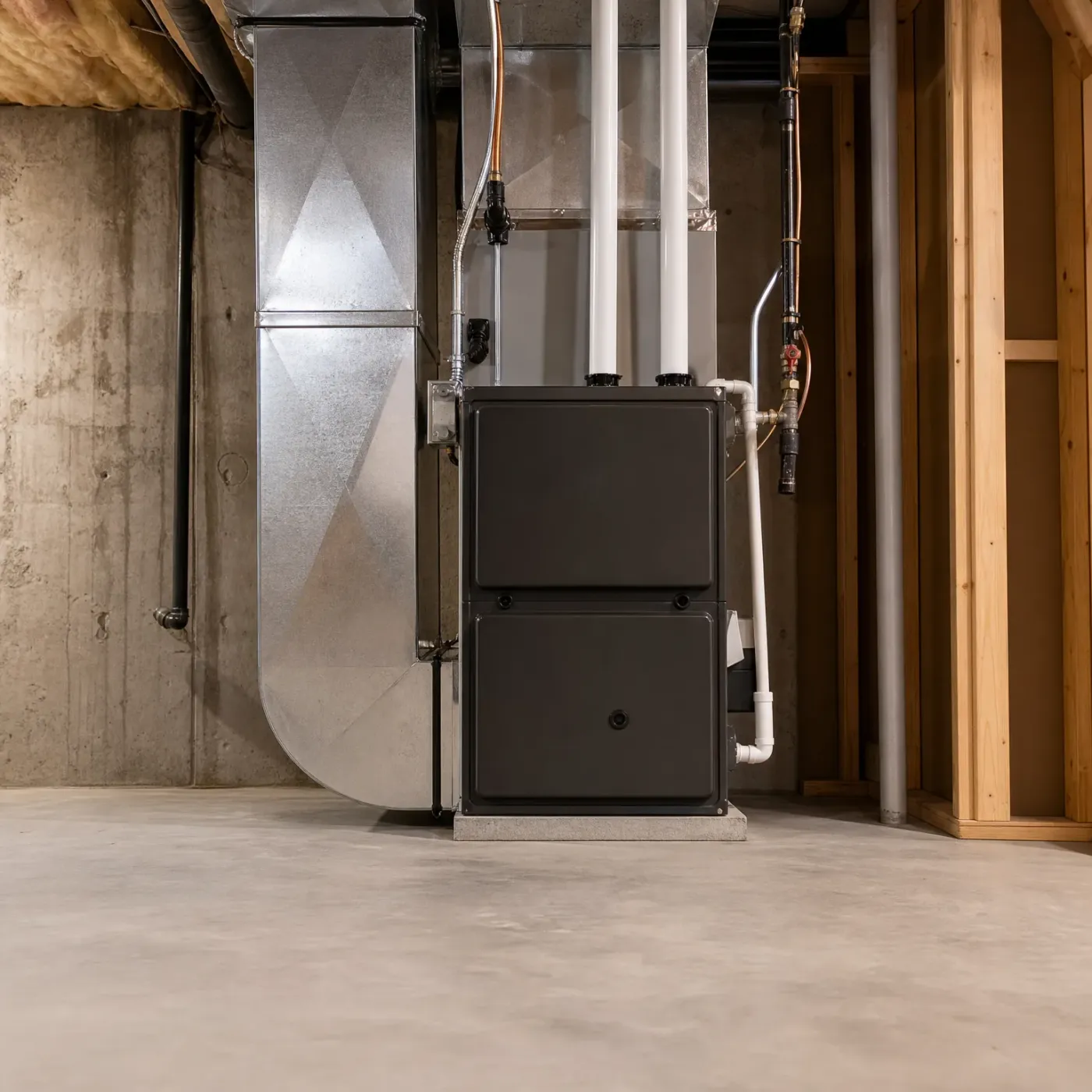
A dark high-efficiency furnace on a concrete pad in a basement, connected to galvanized ductwork, white PVC vent pipes, and copper and black gas piping, with concrete walls and wood framing nearby.

A normal start

A furnace running right lights with a soft whoosh, not a bang. The burner fires the moment it gets the signal, so there's no delay for oil or gas to pool before it catches. Oil furnaces here should get a yearly tune-up, since a clean nozzle and properly adjusted burner are what keep ignition even.
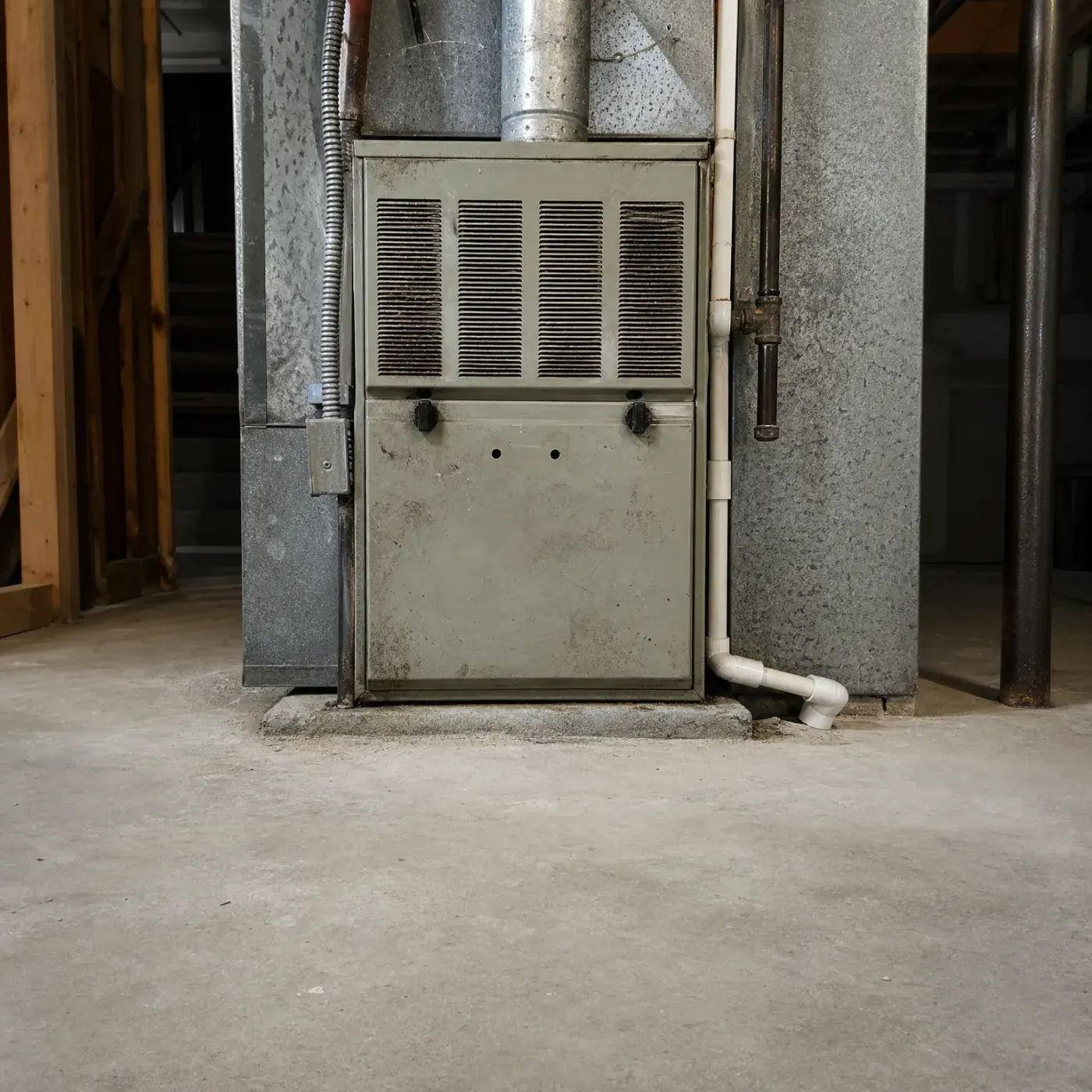
A gas furnace with a louvered upper panel stands on a concrete pad in a basement, flanked by sheet-metal ductwork, white PVC and metal pipes, and insulated columns.

A furnace in trouble

A delayed, uneven ignition is a sign something's off, a dirty nozzle, bad oil pressure, or a cracked heat exchanger from repeated small blasts. New Hampshire winters mean this furnace runs for months straight, and each banging start adds more stress to the same joints and welds.

Why does delayed ignition happen in the first place?

You've heard it's a delayed ignition and maybe seen what a normal start looks like next to yours, but you still want to know why it's happening at all. There's a reason the oil or gas is pooling instead of catching right away, and it comes down to one part not doing its job.

A dirty or worn ignition part is failing to light the fuel on time

On an oil furnace, the nozzle sprays a fine mist that the igniter has to catch instantly. If the nozzle is clogged or the electrodes are coated with soot, the spark is weak or out of position, so the oil keeps spraying for a moment before anything lights it. On a gas furnace, the same delay comes from a dirty flame sensor or a hot surface igniter that's lost its full heat. Either way, fuel builds up first and then catches all at once. A yearly tune-up catches this before it gets worse, since it's one of the few furnace problems that gets louder and more frequent the longer it runs unchecked.

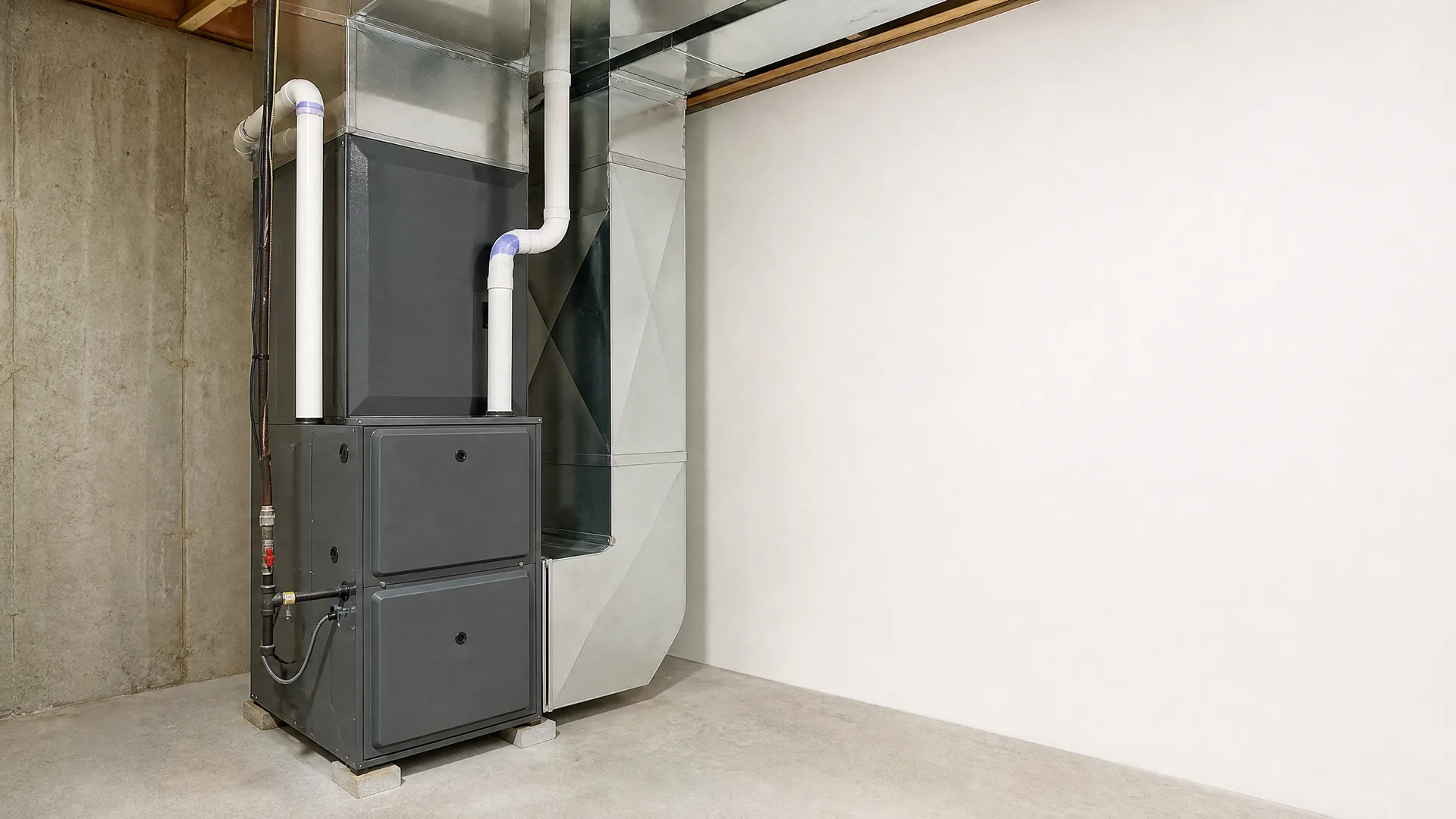
A dark gray high-efficiency furnace with white PVC vent pipes stands against a concrete basement wall, connected to sheet-metal ductwork running along the ceiling joists.

What a dirty nozzle does

An oil furnace fires through a nozzle that sprays a fine, cone-shaped mist into the burner chamber. That mist is what lets it light fast and burn even. Once the nozzle picks up carbon or grit, the spray pattern breaks apart. Instead of a clean mist you get oil dribbling out in an uneven stream, and an uneven stream takes longer to reach the electrodes and catch. That extra second is where the bang comes from.

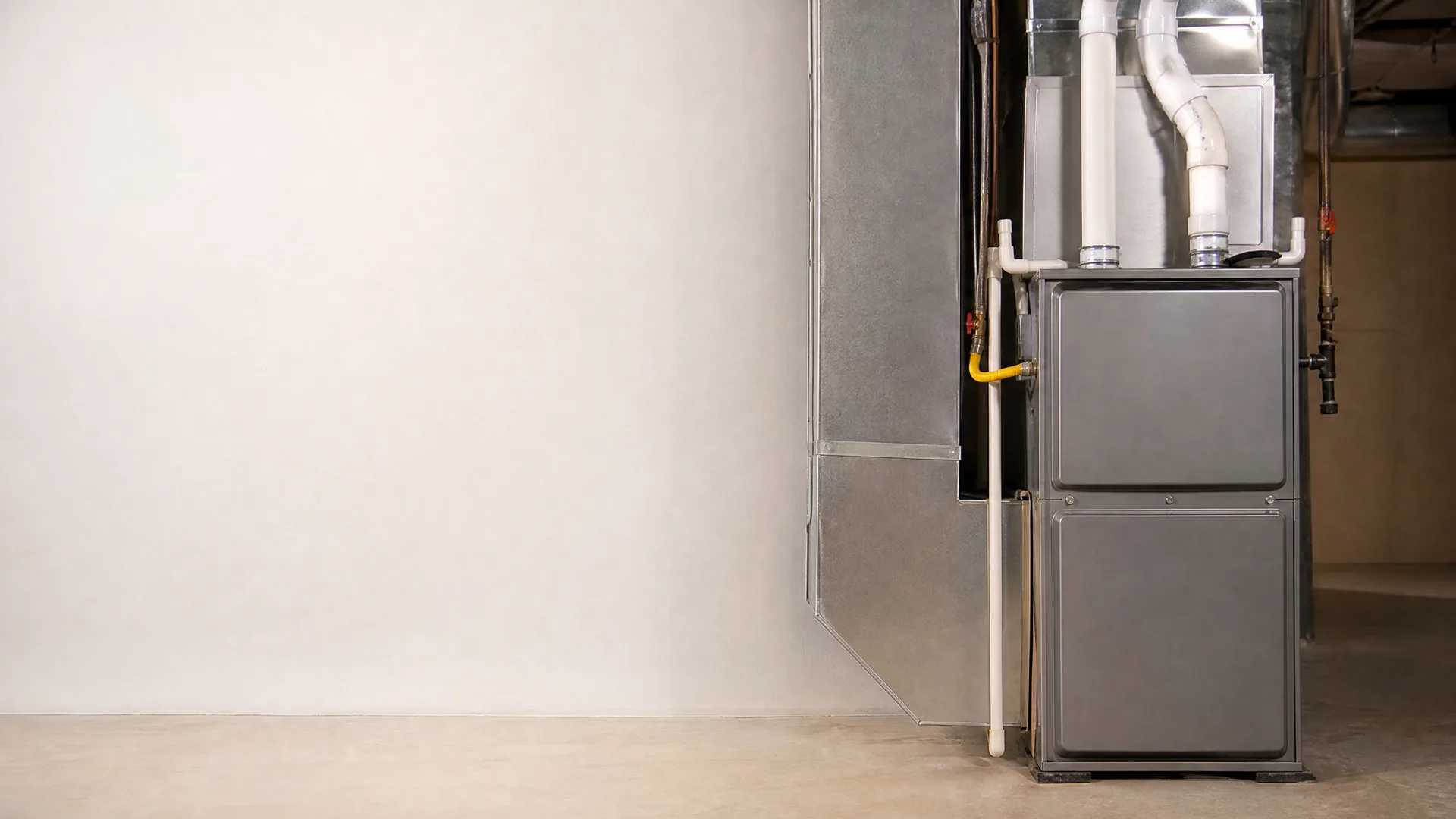
A gray high-efficiency furnace with white PVC vent pipes, a yellow gas line and metal ductwork stands against a plain light wall in a basement with a concrete floor.

What the electrodes are doing

Two electrodes sit near the nozzle and throw a spark across the gap to light the oil mist as it sprays. If they're positioned wrong, pitted, or coated in soot, the spark weakens or misses the spray pattern entirely. The oil keeps pooling in the chamber while the spark tries again, and when it finally connects, it's igniting a chamber full of fuel instead of a fine mist. That's a bigger flame front lighting all at once, which is what you feel as the bang.

Oil Furnace vs Gas Furnace Bangs

Oil furnace

  • The nozzle sprays the fuel into a fine mist, and once it picks up carbon or grit the spray breaks apart, so ignition delays.
  • Oil furnaces here should get a yearly tune-up, and a clean nozzle and electrodes are most of what that visit covers.
  • The igniter has to produce a strong spark at the right position, and a weak or misaligned one lets oil pool before it catches.
  • Soot inside the burner chamber builds up fast once ignition starts running late, and that soot makes the next delay worse.
  • A technician checks the oil pump pressure too, since pressure that's off changes how the nozzle sprays and can cause the same bang.

Gas furnace

  • A gas furnace relies on the igniter to light the burners the instant gas flows, with no spray pattern to maintain.
  • A flame sensor that's coated with residue can cause the burners to shut off and relight, which sounds like a second bang.
  • Dirty burner ports slow down how evenly the flame spreads across the burner, letting gas build up for a moment first.
  • Low gas pressure from the regulator can delay how fast the burners catch, even when the igniter itself is fine.
  • A cracked or failing igniter won't light right away, so gas gathers until it finally sparks and catches all at once.
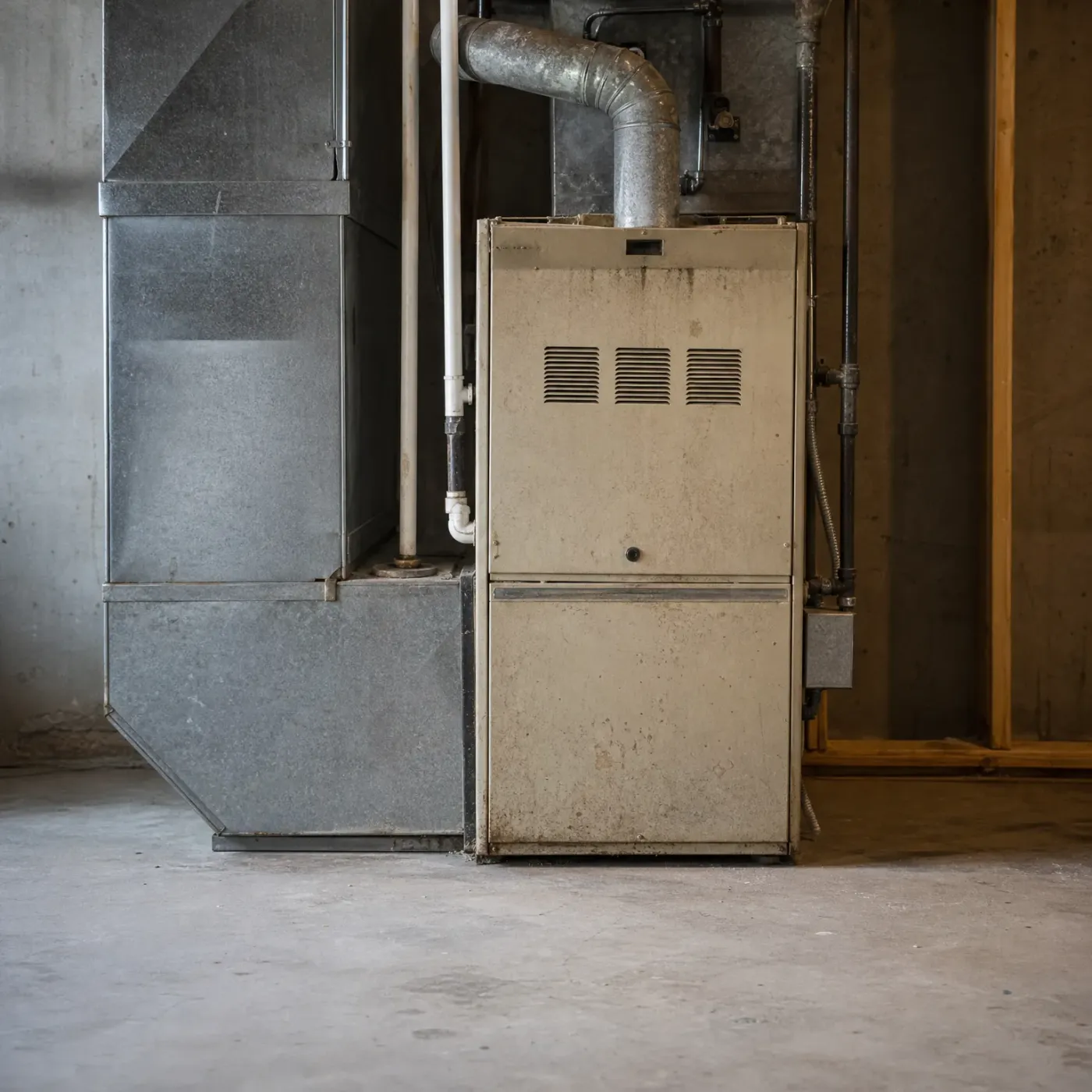
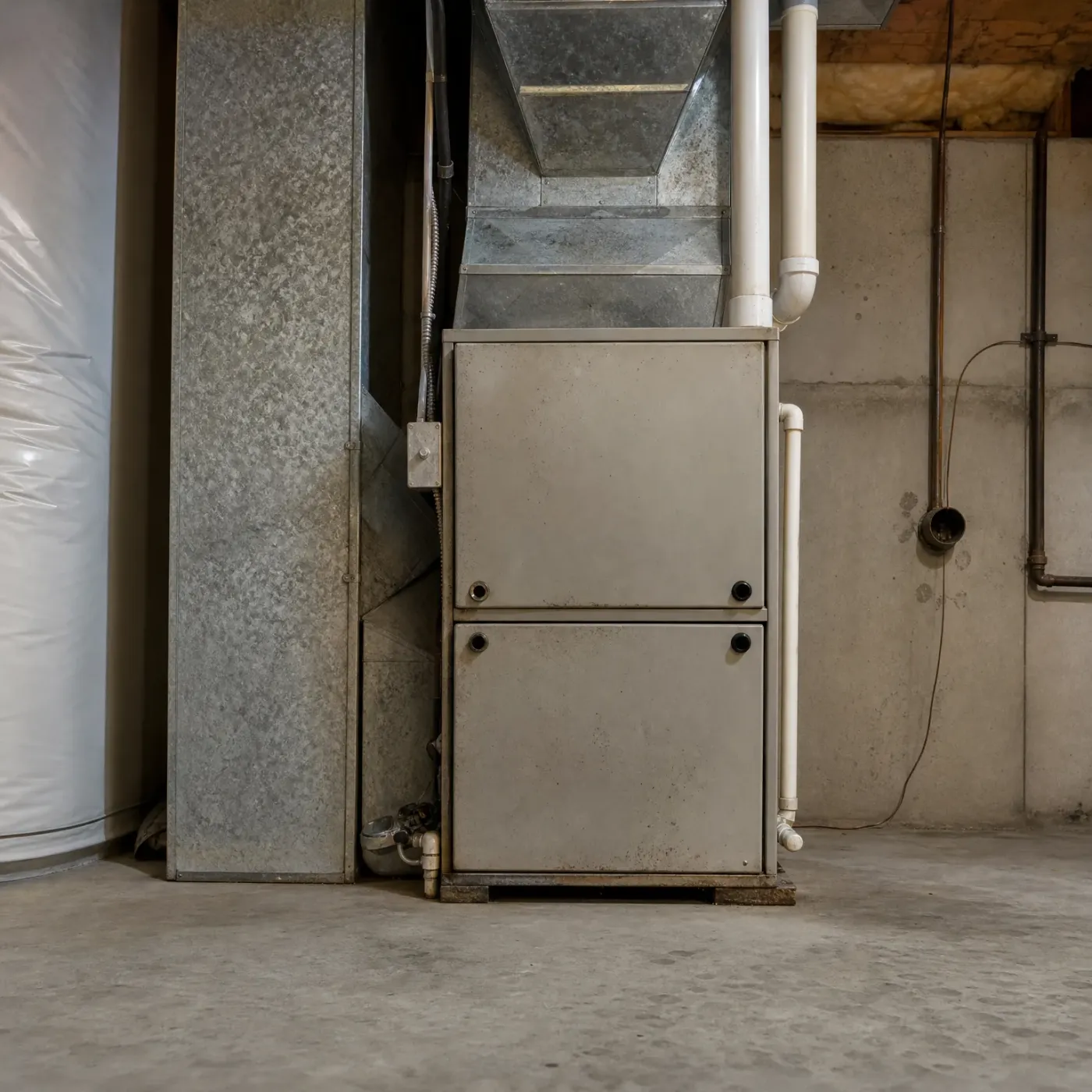
An older beige furnace with a louvered vent panel stands on a concrete basement floor beside galvanized sheet-metal ductwork, a metal flue pipe and vertical pipes along a concrete wall.
Before you get your furnace repair
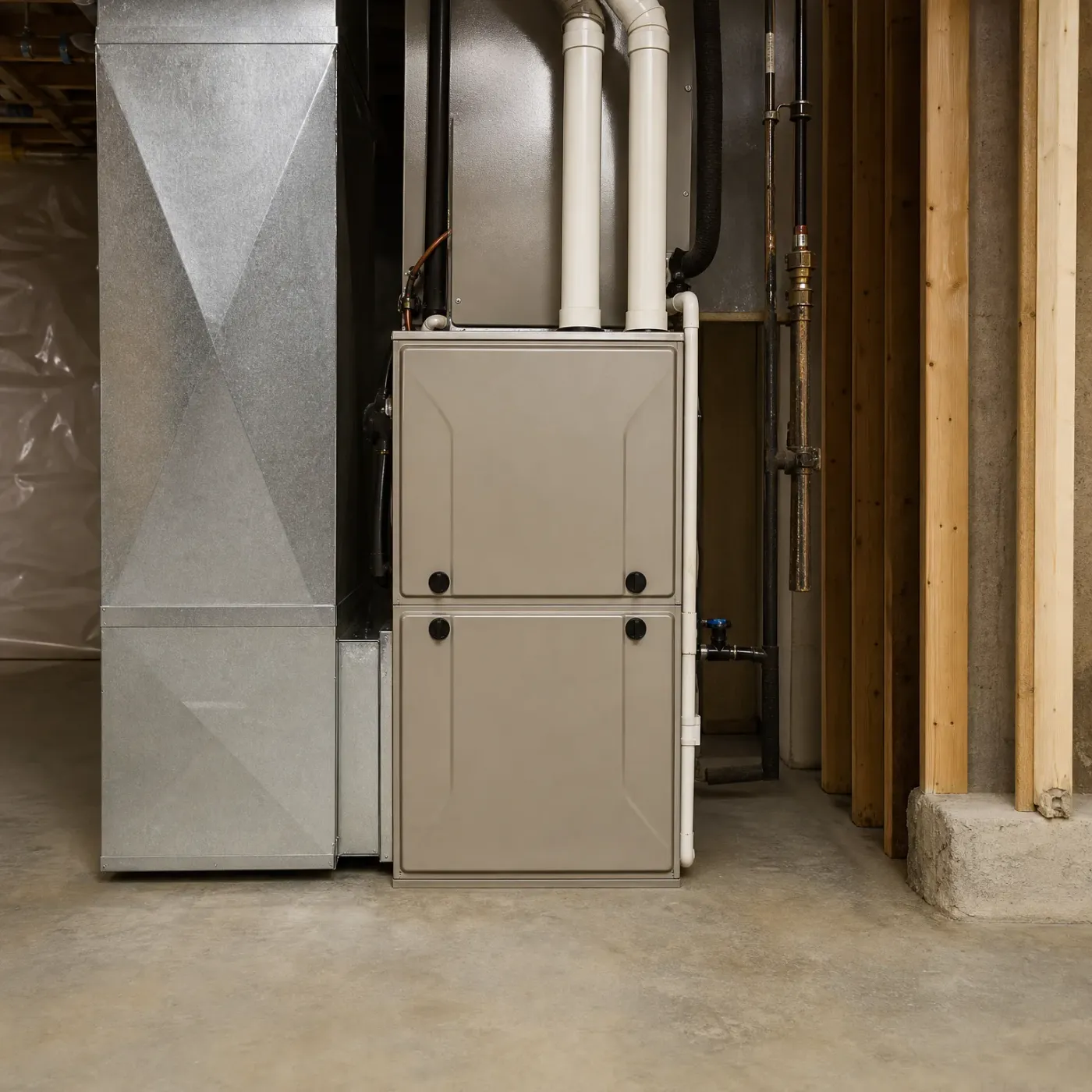
A beige high-efficiency furnace with white PVC vent pipes stands beside galvanized sheet-metal ductwork in a basement with a concrete floor, exposed wood studs, and metal piping along the wall.
After you get your furnace repair
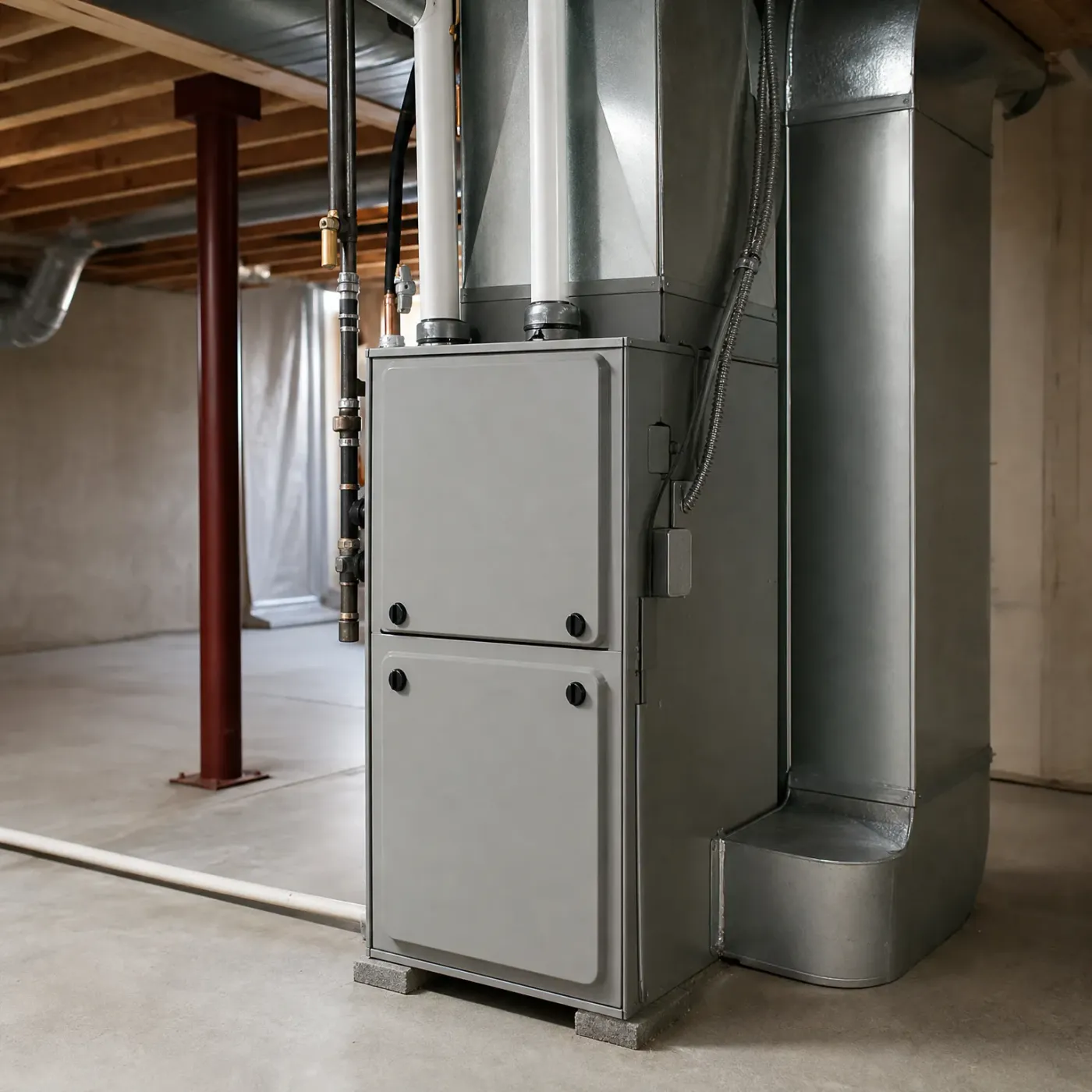
A gray high-efficiency furnace with two access panels stands on blocks in a basement, connected to sheet-metal ductwork, PVC vent pipes, flexible conduit, and gas and water piping, beside a red support column and exposed wood joists.

One request and it's handed off

Your request stays with one local pro.

Send the request today and stop worrying about who to call.

Get a licensed local pro

No fee to send it, and nothing to sign.

A gray high-efficiency furnace with two PVC vent pipes stands in an unfinished basement beside sheet-metal ductwork, a framed and plastic-covered wall, and a bare concrete wall with vertical pipes.
A furnace running right sits on solid footing with tight connections at every joint, nothing to shift or shake loose.
A gray furnace cabinet in a basement, connected to galvanized sheet-metal ductwork and white PVC pipes, against a concrete wall with exposed metal piping and insulation overhead.
A furnace left on a pallet like this, with the bang going ignored, is one a tech will want to look at from the ground up.
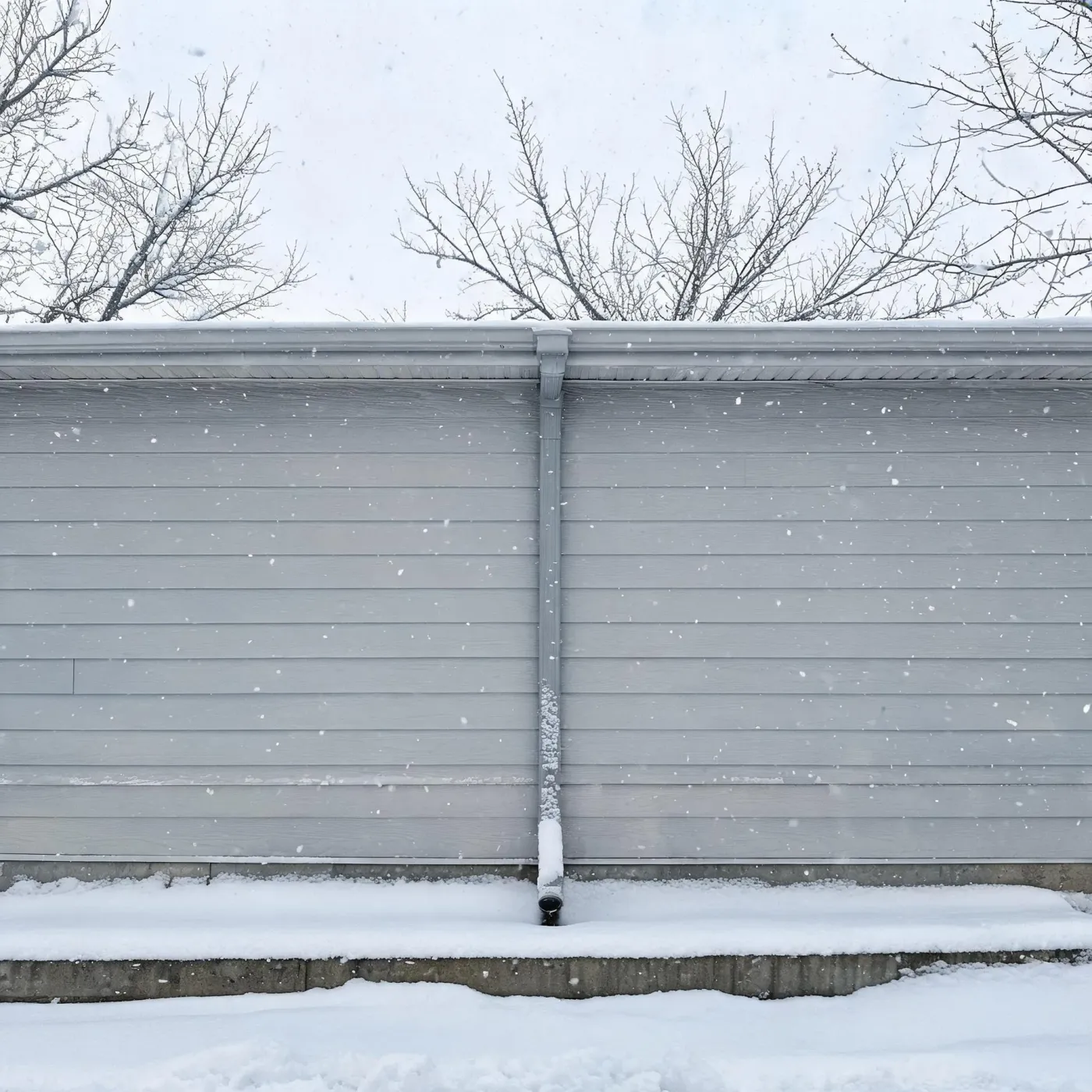
Gray horizontal lap siding on a building wall with a central downspout, seen during falling snow, with snow-covered ground and bare tree branches above the roofline.

Winter nights here average 15°F statewide, according to NOAA climate data. That's cold enough that your furnace is running long stretches to keep up, cycling on and off many times a night instead of a few times. Every one of those starts is a chance for oil to pool in the burner chamber before it catches, so the colder it gets outside, the more often you'll hear that bang. If the noise has started showing up more on the coldest nights than it did in October or November, that's not your imagination. It's the same delayed ignition, just getting more chances to happen.

NOAA nClimDiv 1991-2020 county normals weighted by homes

A woman with shoulder-length dark brown hair in a cream knit cardigan sits in an upholstered armchair beside a window, looking off to the side, with a white bookshelf and potted plant blurred behind her.
A woman with her hair in a bun sits wrapped in a beige knitted blanket on a couch, holding a sleeping child against her chest in a warmly lit room with a lamp and houseplant in the background.

Wait and see what happens.

A delayed ignition gets worse, not better, because the parts causing it keep wearing down every time the furnace fires.

Winter nights average 15°F statewide

At 15°F, your furnace might fire forty or fifty times a night instead of a dozen. That's forty or fifty chances for oil to pool before it catches. A bang you'd barely notice in October turns into a nightly event once the cold really sets in.

NOAA nClimDiv 1991-2020 county normals weighted by homes

Where this leaves you

  • A bang on startup almost always traces back to delayed ignition, oil or gas pooling for a second before it catches.
  • Left alone, the parts causing the delay keep wearing down every time the burner fires, so the noise doesn't fix itself.
  • At 15°F the furnace fires forty or fifty times a night, which means forty or fifty chances for that delay to repeat.
  • A tech who works on oil furnaces all winter in New Hampshire knows the nozzle and electrodes are usually the first thing to check.
  • Sending the request connects you with one local, licensed contractor, not a string of calls from companies you didn't ask for.
  • Once that contractor is on the job, finding someone qualified is off your plate.

The bang is delayed ignition, oil or gas pooling for a second before it lights, and it comes from somewhere specific: a dirty nozzle, worn electrodes, a connection that's loosened on its own over a winter of hard cycling. None of that gets better with time. Every start wears the same parts a little more, and on a 15°F night your furnace might be starting forty or fifty times, which is forty or fifty chances for the delay to repeat and the wear to add up. That's not a reason to panic. It's a reason to get someone out who knows what they're looking at.

Oil heat is the standard here, and a tech who services these furnaces all winter has seen this exact complaint more times than you'd guess. They'll know to check the nozzle and electrodes first, because that's where this usually starts, and they'll know it fast because it's familiar, not because they're guessing.

Send the request and it goes to one contractor, licensed and local to New Hampshire, not a handful of companies all calling you back at once trying to win the job. That's one call to answer, from someone who actually knows your kind of furnace and your kind of winter. Once that connection is made, the search is done. You're not the one tracking down who's qualified and who isn't anymore. That part is handled, and the bang gets looked at by someone who can actually explain it and fix it, instead of staying a noise you just live with until it turns into something worse.

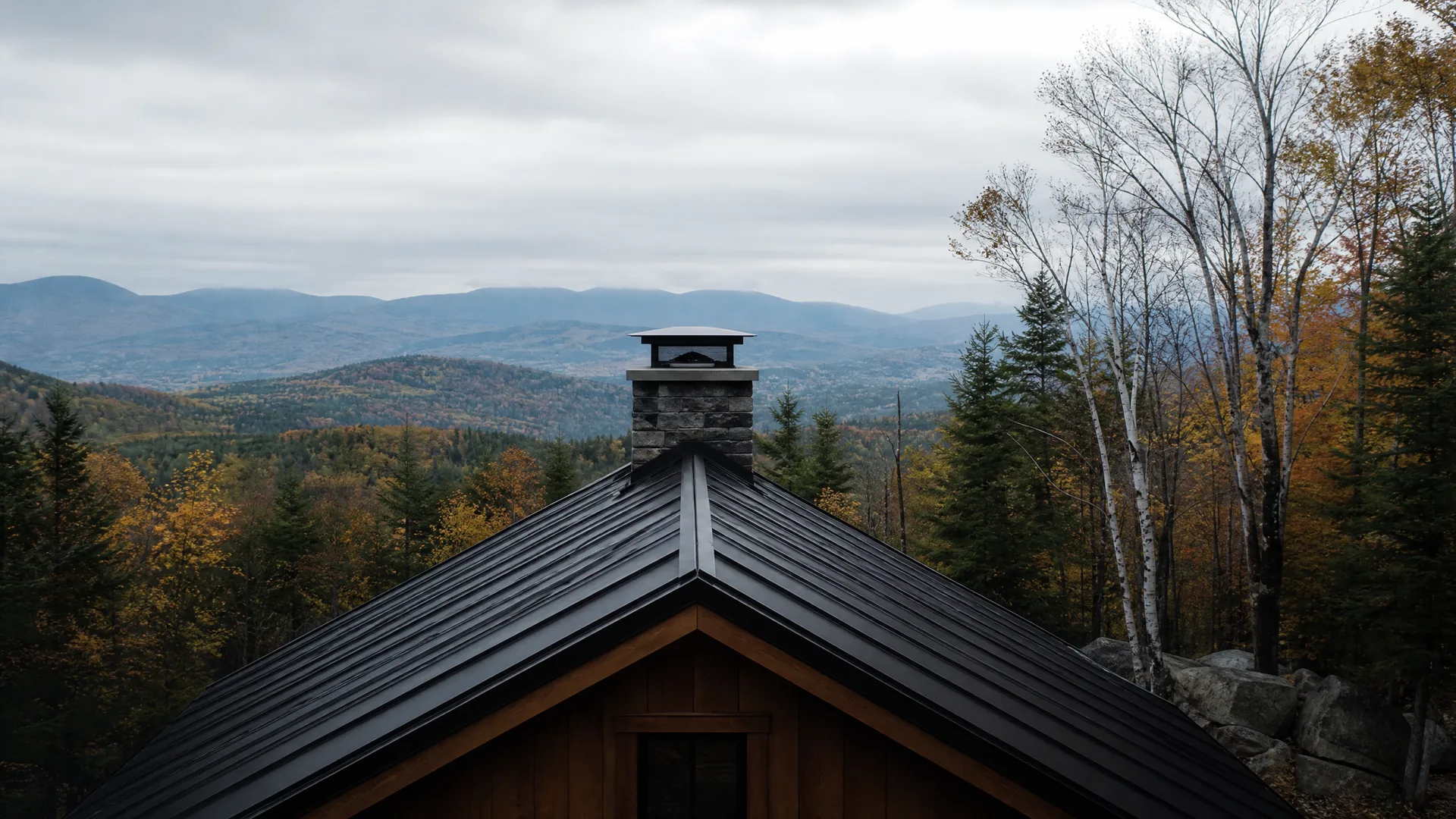
Elevated view over a dark standing-seam metal roof with a stone chimney and wood-sided gable, surrounded by conifers and autumn-colored trees with forested hills under an overcast sky.

Done looking for a furnace pro

Reach a local pro

Sending the form costs nothing.

A furnace that bangs on every cold start isn't going to quiet down on its own once January sets in. Getting someone out to check the nozzle and electrodes now means it's handled before the next cold snap pushes your furnace into forty or fifty cycles a night.