




Why your furnace won't shut off in New Hampshire

Tell a local repair pro what your furnace is doing.

Request a pro

Why won't my furnace shut off in New Hampshire?

A furnace that keeps running past the point where the house feels warm enough usually means something is stuck telling it to keep going. With oil heat and power costs what they are here, a unit that won't shut off is burning fuel and electricity on a system that should have cycled off already, and it's worth knowing what's actually happening before that bill shows up.

A stuck relay or a bad thermostat signal is usually keeping the burner running

Most often the furnace isn't broken, it's being told the wrong thing. A thermostat that's lost calibration, or wiring that's failed somewhere between it and the furnace, can keep sending the signal to run even after the house hits temperature. Inside the furnace itself, a relay or fan limit switch can stick closed, so the switch that's supposed to cut power to the burner never does. A dirty flame sensor can also cause problems that look similar, though that usually shows up as short cycling rather than a furnace that never stops. Whatever the cause, every extra hour the burner runs is oil burned and a blower motor pulling power it doesn't need to, and with electricity costing what it does in New Hampshire, that adds up fast.

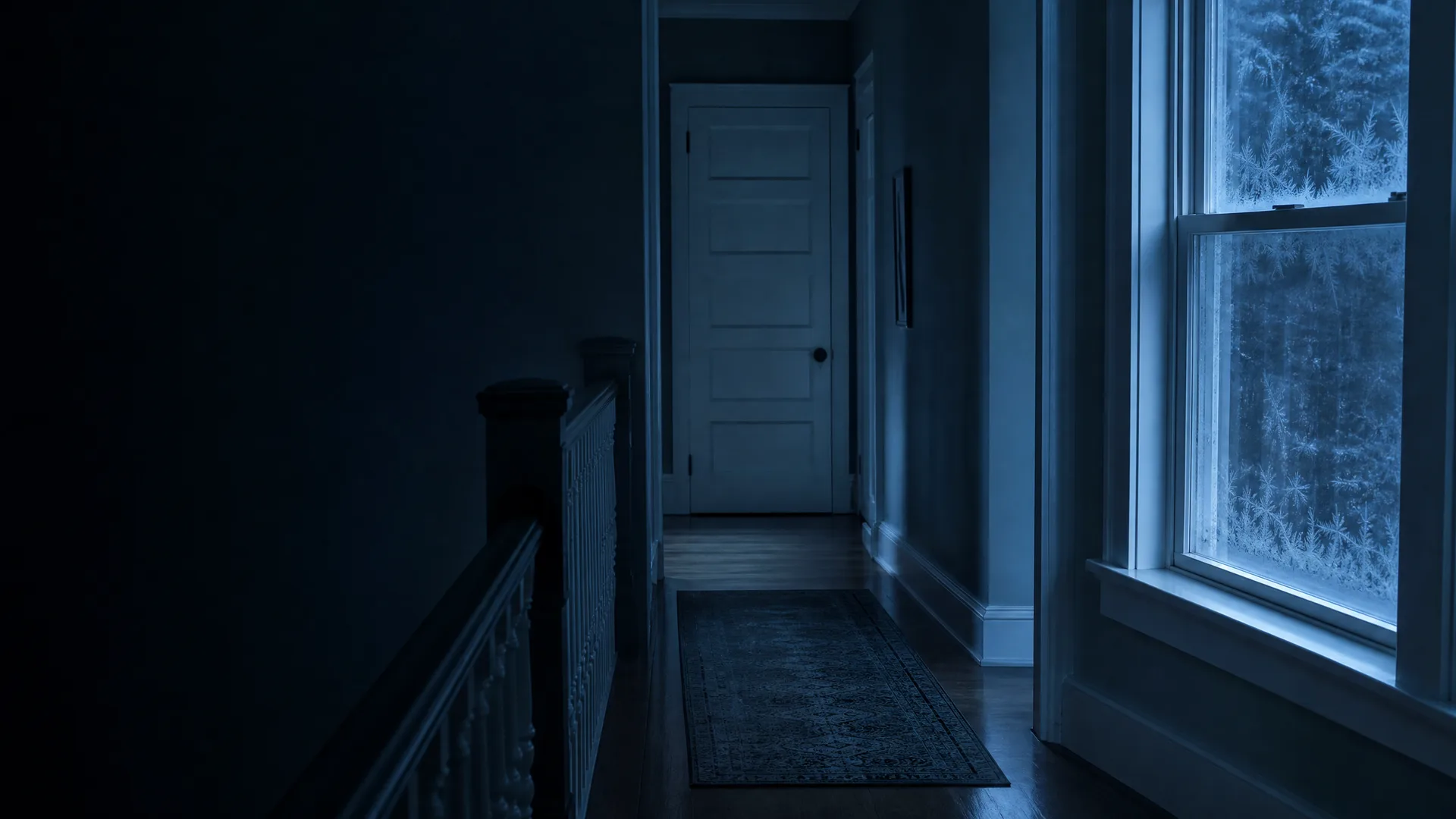
Dimly lit interior hallway at night with a closed white paneled door at the end, a long runner rug on a wood floor, a stair railing at left, and a frost-covered window admitting blue light at right.

You wake up at 2 a.m. and the house is too warm. Down the hall the vents are quiet, not blowing, but the burner is still going somewhere below you. You get up to check the thermostat and the hallway floor is cold under your feet anyway, the window glass edged with frost. Outside it's the kind of January night New Hampshire gets, the air still and hard. You can hear the oil burner cycling in the basement, on when it should have shut off an hour ago. You stand there in the blue dark, not sure whether to shut it off yourself or just wait until morning and watch the oil tank gauge drop.

Thermostat or Furnace: Where's the Fault?

Thermostat Problem

  • If the house actually cools down to the setpoint eventually, the thermostat itself may be the issue, not the furnace.
  • A thermostat with a loose wire or a bad internal sensor can keep sending the call for heat even after the air has turned over.
  • Moving the thermostat setting down a few degrees and listening for the burner to stop is a quick way to see if it responds at all.
  • An older mechanical thermostat with a stuck anticipator can hold the circuit closed longer than it should.
  • If the display looks normal and the batteries are fresh, the fault is more likely downstream in the furnace itself.

Furnace Problem

  • A stuck relay or a failed limit switch inside the furnace can keep the burner firing regardless of what the thermostat is telling it.
  • On an oil furnace, a cad cell that's gone bad or coated with soot can fail to tell the burner to shut off once the flame is out.
  • A blower that won't stop running after the burner has shut down points to a different problem, usually a fan limit switch stuck closed.
  • If the furnace keeps running even with the thermostat wire disconnected at the unit, the problem is inside the furnace, not the controls.
  • With oil heat, a furnace running longer than it should burns through fuel at a cost that shows up fast given how expensive heating oil and power run here.
  • A furnace that cycles the burner on and off rapidly, rather than running continuously, points to a different issue than one that just won't stop.
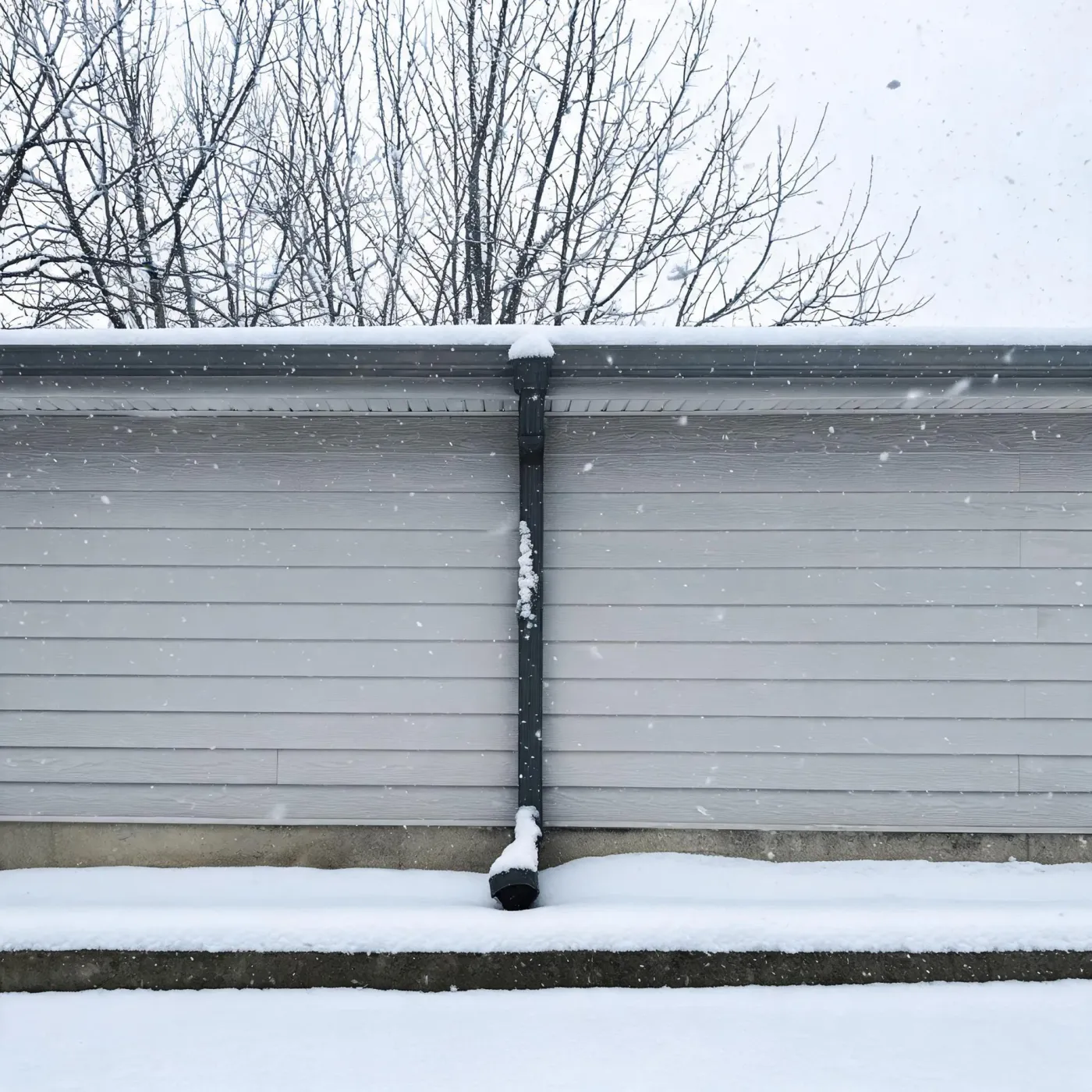
Exterior wall of a building with light gray horizontal siding and a dark downspout running to the ground, with snow on the roofline, steps, and ground, and bare trees behind during falling snow.

Winter nights average 15°F statewide, according to NOAA climate data. At that temperature your furnace is in its longest runs of the year, the burner cycling on again and again through the night to make up for heat loss through the walls and windows. A furnace that's already struggling to shut off has no slack left on a night like that. The stuck relay or bad limit switch that might only cause a short extra run in October will keep the burner firing for hours when it's 15 outside, and on oil heat that shows up fast in fuel use. If the house is warm enough but the furnace won't stop, a night this cold is when you'll notice it most, and when it's worth having someone look at what's keeping it running.

NOAA nClimDiv 1991-2020 county normals weighted by homes

A local pro for your furnace repair

Send the request and finding a pro stops being your problem.

Sending the form costs nothing.

What a stuck relay costs you

A furnace that won't shut off is usually failing at one specific point: the relay or valve that should cut power to the burner once the thermostat is satisfied. When that part sticks closed, the burner keeps firing oil even though the house is already warm. Oil doesn't stop being consumed just because the air feels fine at the register. With power rates here among the highest in the country, a furnace stuck in a long run isn't just loud or annoying overnight. It's burning fuel and running the blower motor on electricity for hours it shouldn't need, and that keeps showing up on the bill until the part gets replaced.

Why ignoring it gets worse

A relay or valve that sticks once tends to stick again, and more often as it wears. The first night it might run twenty extra minutes past setpoint. A few weeks later it could run most of the night, cycling the burner on long after the thermostat stopped asking for heat. The heat exchanger and burner assembly aren't built for that kind of extended duty, and the strain adds up faster than the symptom does. What starts as a furnace that runs a little long tends to become a furnace that runs constantly, and by then the problem isn't just the stuck part anymore.

A smiling bearded man in a dark green hooded jacket and blue t-shirt sits on a couch in a living room with shelves, a potted plant, and a bowl of popcorn on a wooden table.
A smiling man in a green long-sleeved shirt sits on a beige sofa in a living room, with a bowl of popcorn in the foreground, a large potted plant and shelving behind him.
A smiling man in a dark blue T-shirt sits on a couch in a dimly lit living room with a bowl of popcorn and a remote on a wooden table, a lit floor lamp and bookshelves behind him, and windows showing greenery.
A smiling bearded man in a dark green long-sleeved shirt sits on a leather couch in a living room, with a bowl of popcorn and a remote control on a wooden table in the foreground.

Letting it run until morning

You turn the thermostat down and go back to bed, figuring the furnace will catch up and shut off on its own. Sometimes it does, after the house overheats past what anyone set it to. But if the part that's stuck is the relay or the valve, turning the dial does nothing. The burner keeps firing oil all night regardless of what the thermostat says, and you wake up to a house that's too warm and an oil tank that's noticeably lighter than it should be.


Shutting off the system now

You flip the switch at the furnace or trip the breaker and the burner stops right where it is. No more oil burning into a house that's already warm enough. It's not a fix, the relay or valve is still stuck, but it stops the bleed until someone can look at it. Given what oil and power cost in New Hampshire, a few hours of a furnace running wild adds up fast, and shutting it down yourself is the one thing you can do before help arrives.

A woman in a dark gray sweater reclines on a light sofa with eyes closed and a slight smile, under a textured gray blanket with an open book resting on her lap, with a lit table lamp and plant in the background.
A smiling bearded man in a navy crewneck sweater sits at a dinner table with a glass of red wine, plates and glasses in the foreground, in a dimly lit room with a lamp and framed picture behind him.

Call now

A technician can look at the stuck relay or valve before the burner runs through another full tank of oil overnight.

Find a furnace pro

Wait and watch

If the furnace keeps shutting off late but still shuts off, you can track it a few more nights before deciding it needs a look.

Find a furnace pro
A woman in a cream sweater and jeans stands in the open doorway of a white stucco house, holding the dark door, while a man in a dark quilted jacket seen from behind walks toward the entry past potted plants.

What's actually happening inside the furnace

Your thermostat sends a call for heat to the furnace's control board. The board fires the igniter, opens the oil valve, and starts the burner. Once the house reaches the set temperature, the thermostat is supposed to break that circuit and the board shuts the valve. A furnace that keeps running after the house is warm usually means the board never got the signal to stop, or got it and couldn't act on it. The valve or relay that should close is staying open instead, so oil keeps feeding the burner on its own.

That's a mechanical failure inside the furnace, not something to test by adjusting the thermostat a few more times. A technician who's looked at hundreds of oil furnaces can tell within minutes whether the problem is the relay, the valve, or the board itself, because each one fails in a slightly different way and leaves different signs. Once you send in a request, a contractor who works on your type of system gets matched to your situation and reaches out to go look at it directly.

A gray upholstered sofa with a matching cushion sits beside a potted plant and a wooden table holding a small green plant in a stone pot, near a curtained window.

Winter nights average 15°F statewide

At 15°F your furnace is firing most of the night just to hold the house steady. If the relay or valve is stuck, those long runs stop looking normal and start burning oil for no reason.

NOAA nClimDiv 1991-2020 county normals weighted by homes

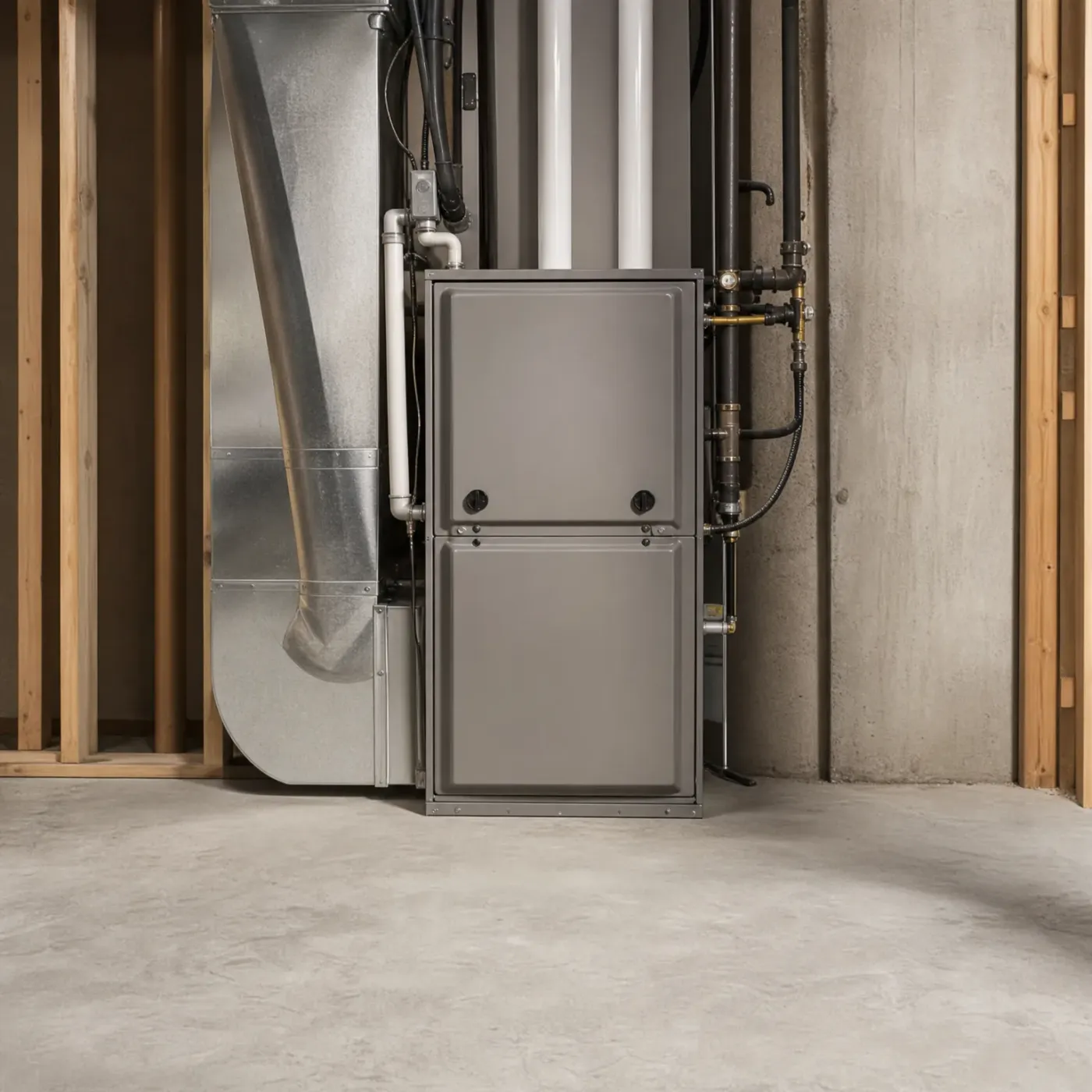
A gray furnace cabinet in a basement with sheet-metal ductwork, white PVC vent pipes, and black gas piping against a concrete wall and wood-framed partition on a bare concrete floor.
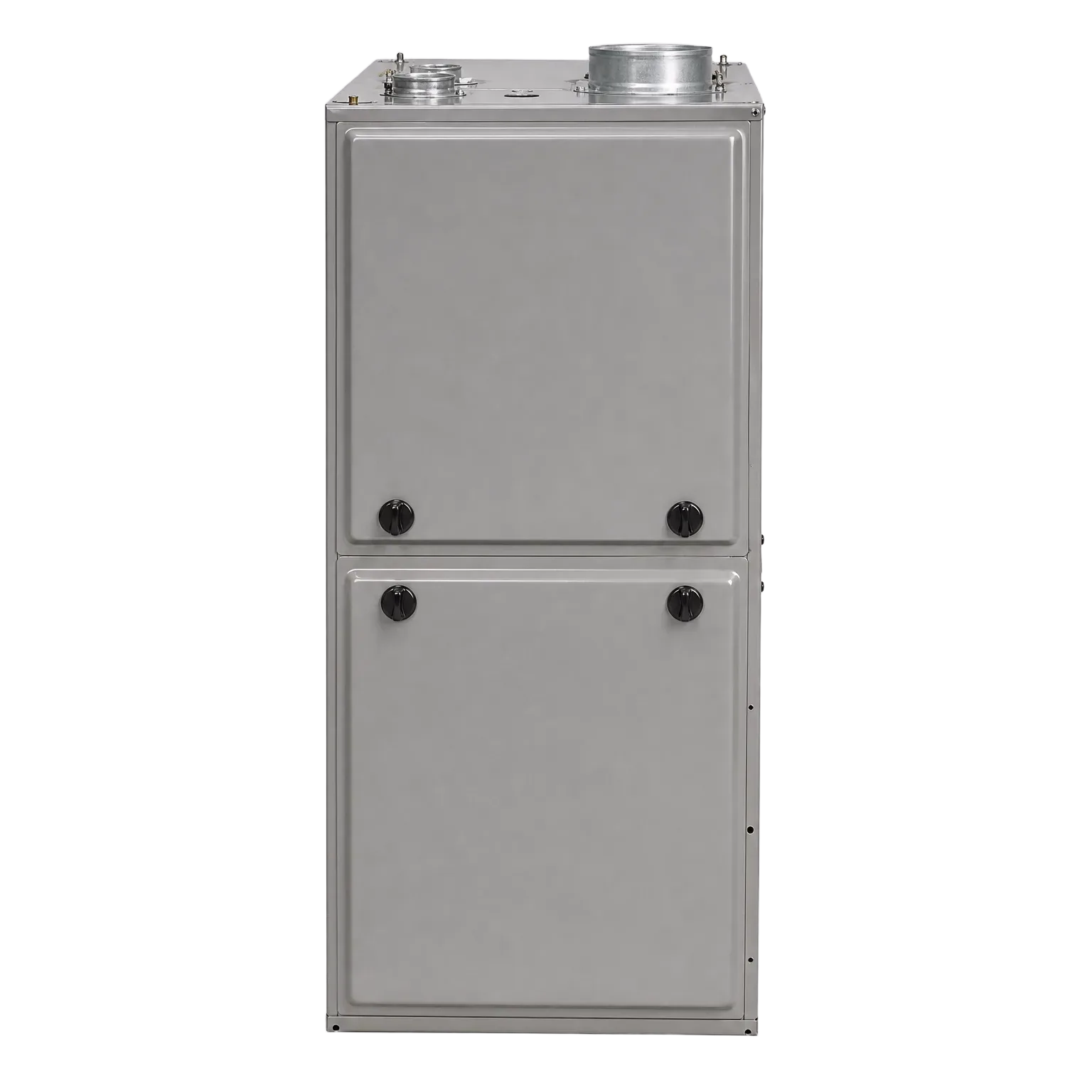
A furnace like this cycles on, heats the house, and shuts off clean, which is what tells you something's actually wrong when yours doesn't.
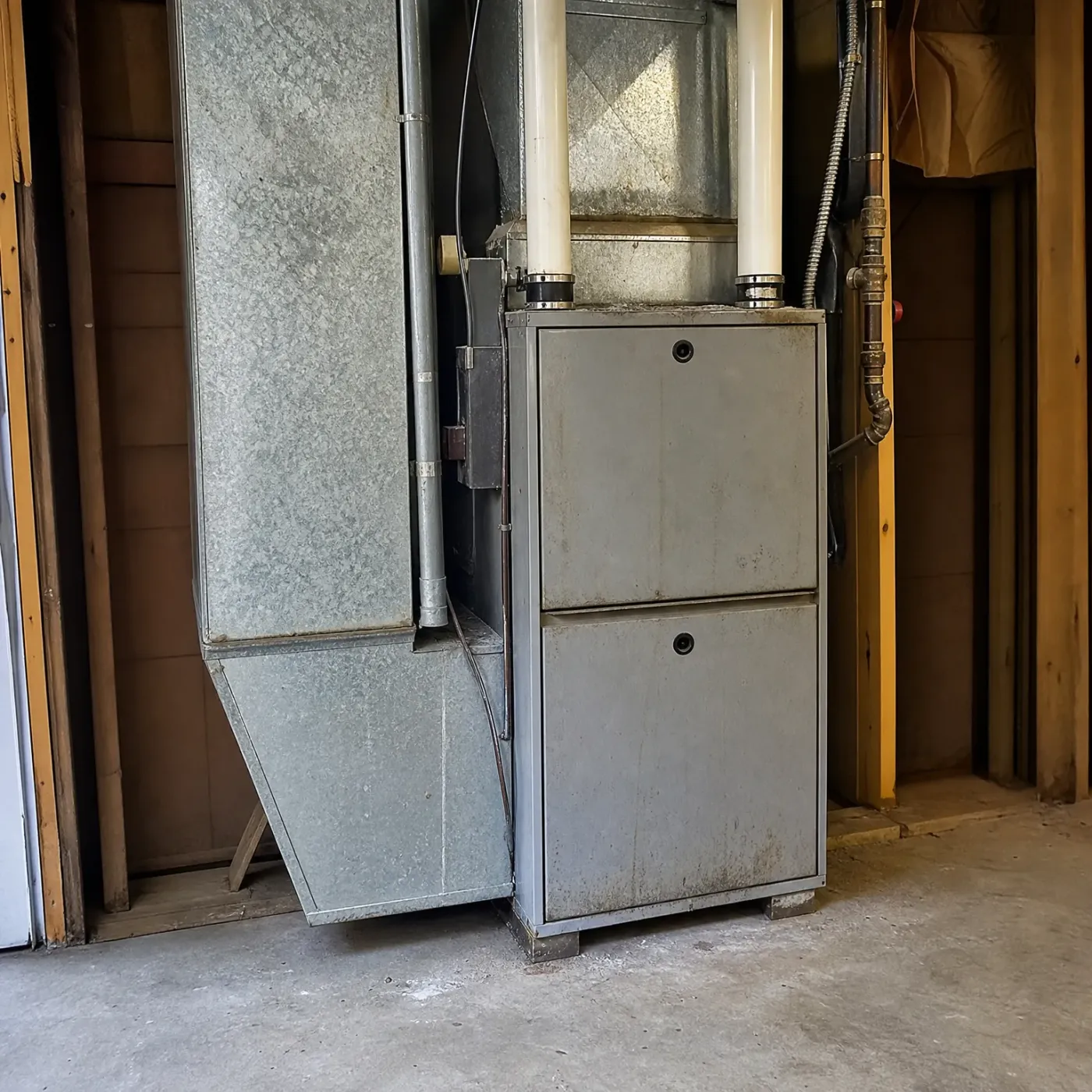
A gray metal furnace with two white PVC vent pipes stands on a concrete floor beside galvanized sheet-metal ductwork in a basement or utility space with wood framing.
Rust and age on a furnace like this don't make it run long, but a stuck relay or valve inside one will, no matter how it looks on the outside.
  1. Thermostat senses the house has reached the set temperature.

  2. Thermostat sends a signal telling the control board to stop.

  3. Control board should cut power to the relay or valve.

  4. A stuck relay or valve keeps the burner firing anyway.

A furnace that won't shut off almost always comes down to one stuck part, the relay or valve that's supposed to cut power to the burner once the house is warm enough. Everything upstream of it, the thermostat, the wiring, the control board, can be working fine and the burner will still keep firing if that one part doesn't let go. You don't have to figure out which it is. You don't have to watch the oil tank drain overnight to be sure something's wrong. Once you send the form, the work of finding someone who can get out to look at it is off your plate, not something you have to chase down between now and whenever the burner finally stops. A stuck relay or valve doesn't fix itself with another cold night. Get it looked at, and the guessing part of this ends there.

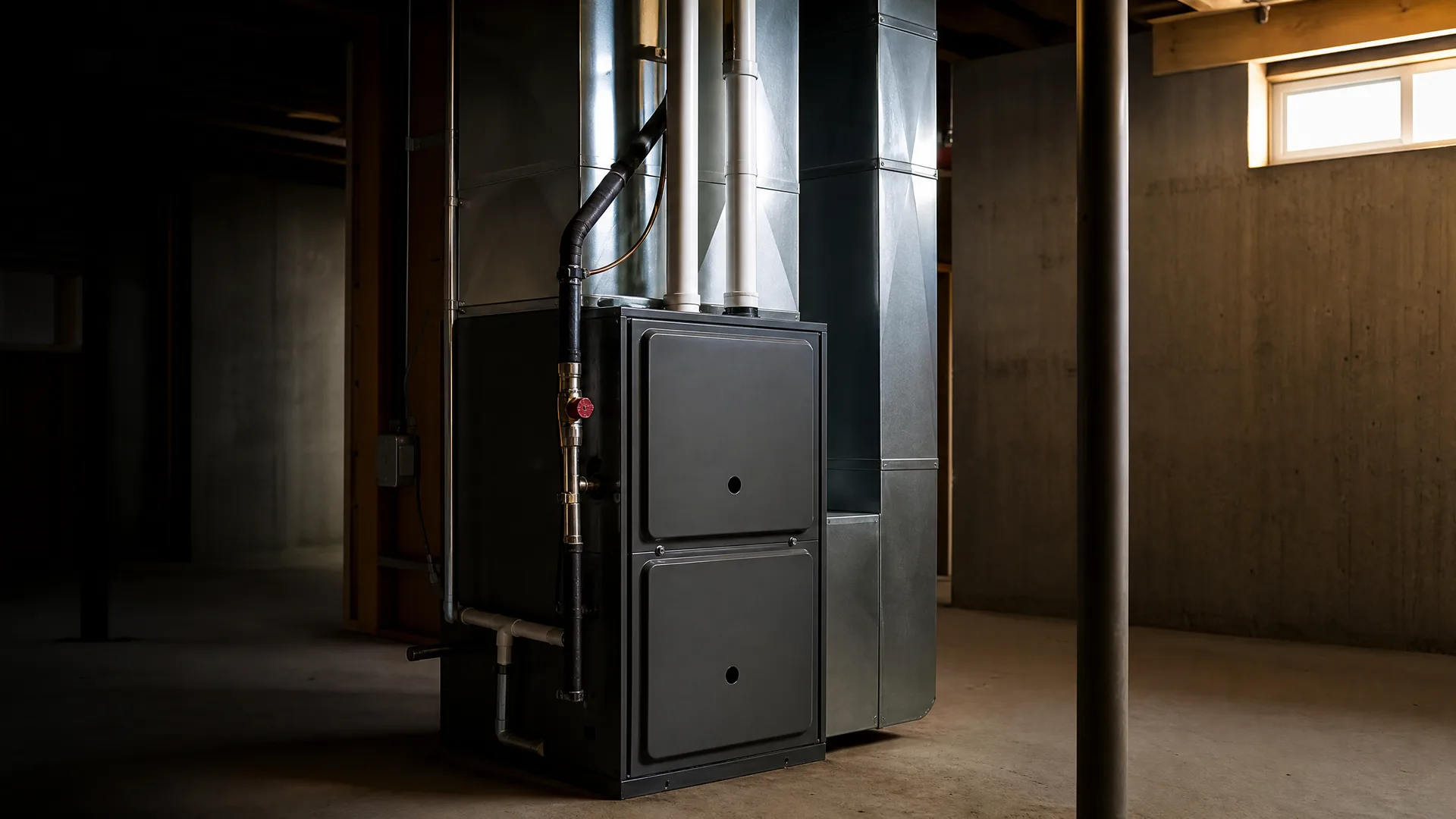
A dark gray high-efficiency furnace with two white vent pipes and connected sheet-metal ductwork stands in an unfinished basement with concrete walls, a support pole, and a small window.

A pro who works on furnaces

Step 1 of 3: Equipment