The right pro for this job
Why your furnace won't turn on in a New Hampshire winter
A furnace that won't start on a cold New Hampshire morning usually comes down to a short list of causes, from the igniter to the thermostat wiring to the gas valve itself. This page walks through what to check and what it means. If you want a local contractor who works on furnaces all winter to take a look, you can get matched with one who'll reach out directly.
Connect with a proA furnace that won't turn on is usually one of three things: no power getting to it, no signal telling it to fire, or a safety switch that's stopped it on purpose. If it runs on oil, check whether the tank is actually empty before anything else. That gets missed more than people expect, especially midwinter when deliveries slow down. A tripped breaker or a switch near the furnace that's been bumped off will also stop it cold, and both are worth checking before you assume the worst. If the furnace hums or clicks but doesn't light, the igniter or flame sensor is likely failing, a normal wear part after years of use. A furnace that shuts itself off partway through a cycle is often doing that on purpose, because a clogged filter or blocked vent is overheating it and the limit switch is cutting power to protect it. None of these are safe to force past on your own, and with single-digit nights ahead, this isn't one to sit on.




Oil furnaces shut down for their own reasons
Oil systems don't fail the way gas ones do. There's no pilot light and no gas valve to lose power. What stops an oil furnace is usually the oil itself, or the path it takes to burn. A clogged nozzle, a dirty filter, or air in the line after a delivery will keep the burner from firing even with a full tank. The cad cell, the sensor that watches for the flame, will shut the whole thing down if it doesn't see fire within seconds of startup, even if everything else is working. That's a safety feature, not a malfunction, but it means the furnace won't try again on its own.
A furnace with no power won't restart itself
If your power went out during a storm, the furnace won't come back on just because the lights did. Oil burners use an ignition transformer and a motor to run the pump, and both need electricity to start a burn cycle. A tripped breaker or a reset switch that's been hit too many times will hold the system off until someone addresses it directly. With electricity rates in New Hampshire running high, it's worth checking the breaker panel before assuming the furnace itself failed. Sometimes the furnace is fine and the problem is a few feet away on the wall.
Matched to your furnace job
The pro who reaches out is licensed in New Hampshire.
Tell a local repair pro what your furnace is doing.
There's no charge for the request.
Oil Furnace or Gas Furnace
Oil furnace
- If the burner won't fire at all, check the tank gauge first, since an empty tank shows the same symptoms as an electrical fault.
- A clogged nozzle or dirty filter can starve the burner of fuel even with plenty of oil in the tank.
- The oil line can gum up over a cold season if the tank sits low, pulling in sediment from the bottom.
- A reset button on the primary control will cut the burner after repeated failed ignition attempts, and it's not meant to be held down or reset more than once.
- Soot buildup on the flame sensor can tell the control the burner isn't lit even when it is, so it shuts the system down.
Gas furnace
- If the igniter won't glow or the flame sensor is dirty, the furnace will try to start and then shut itself off within seconds.
- A gas valve that's failed open or closed usually means no heat at all, with the blower sometimes still running on just air.
- Thermostat wiring that's loose or miswired can keep the call for heat from ever reaching the furnace's control board.
- A pressure switch stuck from a blocked vent pipe will stop ignition before gas even reaches the burner.
- Power at the switch doesn't guarantee power at the furnace, since a tripped breaker or blown fuse on the control board can still leave it dead.
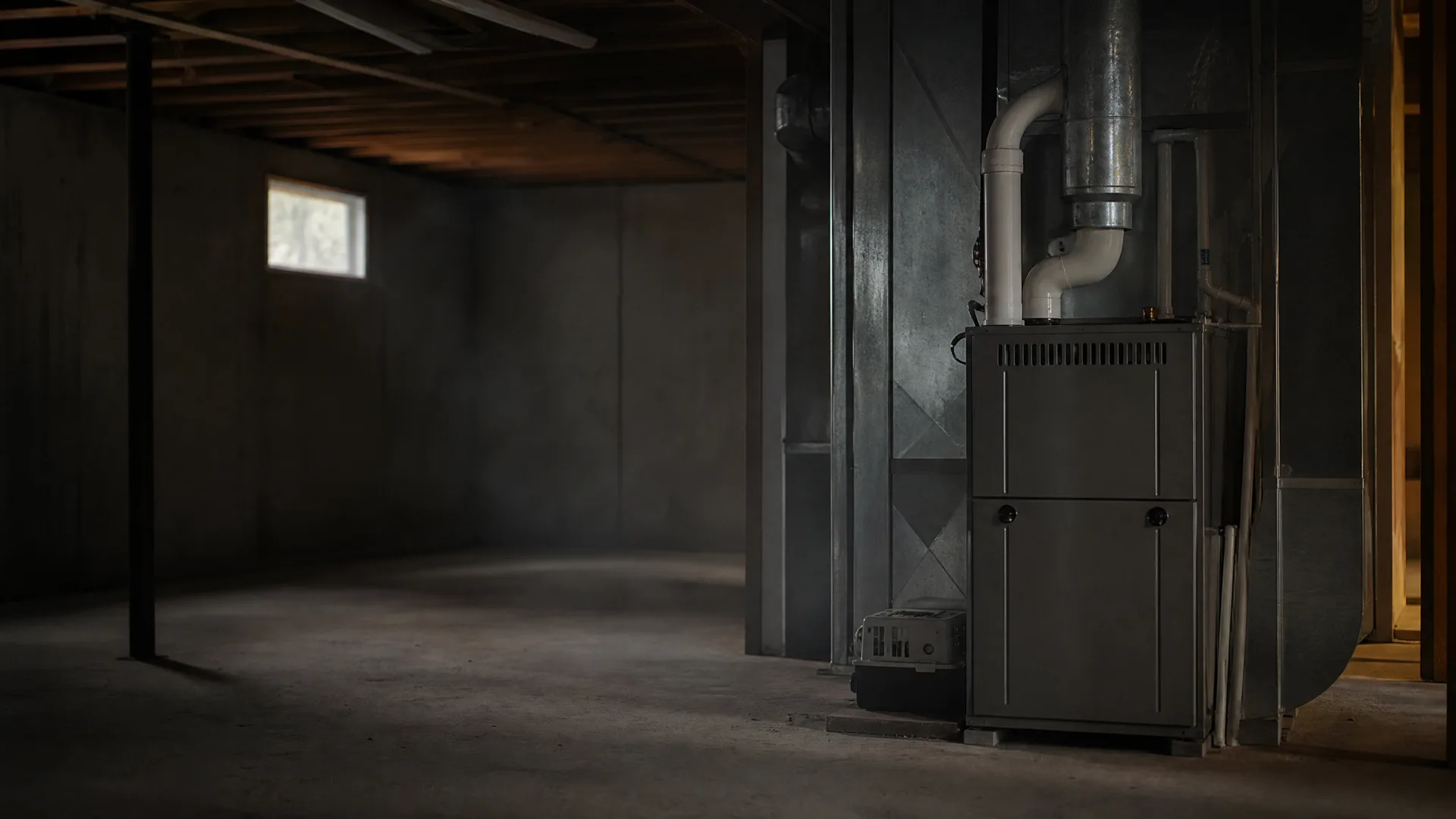
It's just past six on a November evening, and the light outside is already gone. You go down to the basement to find out why the house has gone cold, and there it is: the furnace sitting dark, no hum, no glow from the sight glass. You crouch by the burner and catch a faint haze of dust hanging in the air near the access panel, stirred up when you pulled it open. Upstairs you can hear someone ask if dinner's going to be warm tonight. You reach for the reset button, then stop, because you've pressed it twice before and nothing happened. The oil tank gauge is across the room. You haven't checked it yet.
Winter nights average 15°F statewide
At 15°F, a furnace that stalls for even a couple hours lets a house cool fast, and oil heat has to work that much harder to catch back up. A short ignition delay matters more on a night like this than it would in a milder spell.
NOAA nClimDiv 1991-2020 county normals weighted by homes
A furnace that loses power or ignition can sometimes wait until morning if the house is holding heat and the temperature outside isn't extreme. A thermostat that's lost its wiring or a tripped breaker is often a quick fix once someone's looking at it.
A furnace that's gone cold on a night near 15°F can't wait. An oil furnace that's stopped on a safety switch or run dry needs a contractor who knows oil systems, not just gas ones, before the house loses too much heat to catch back up.



A dark furnace in January isn't a mystery, just a search
Most of the time it's one of the same few things: a breaker, a thermostat that lost its wiring, a clogged nozzle, a safety switch doing its job. The furnace isn't broken in some new way. It's doing what it does when one of those fails, and the fix usually matches the cause.
What's harder to tell from the basement is which one it is, and whether the oil line or the ignition system needs a hand to sort out. A contractor who works on furnaces around New Hampshire all winter has likely seen your exact symptom before, often more than once this season. Ask for help and you're matched with one local contractor who takes on your situation directly, not a list of companies competing for the call.

A furnace pro near you
Only one pro gets your request, so you hear from one company.