Tell us about the job
Takes about a minute. No obligation.
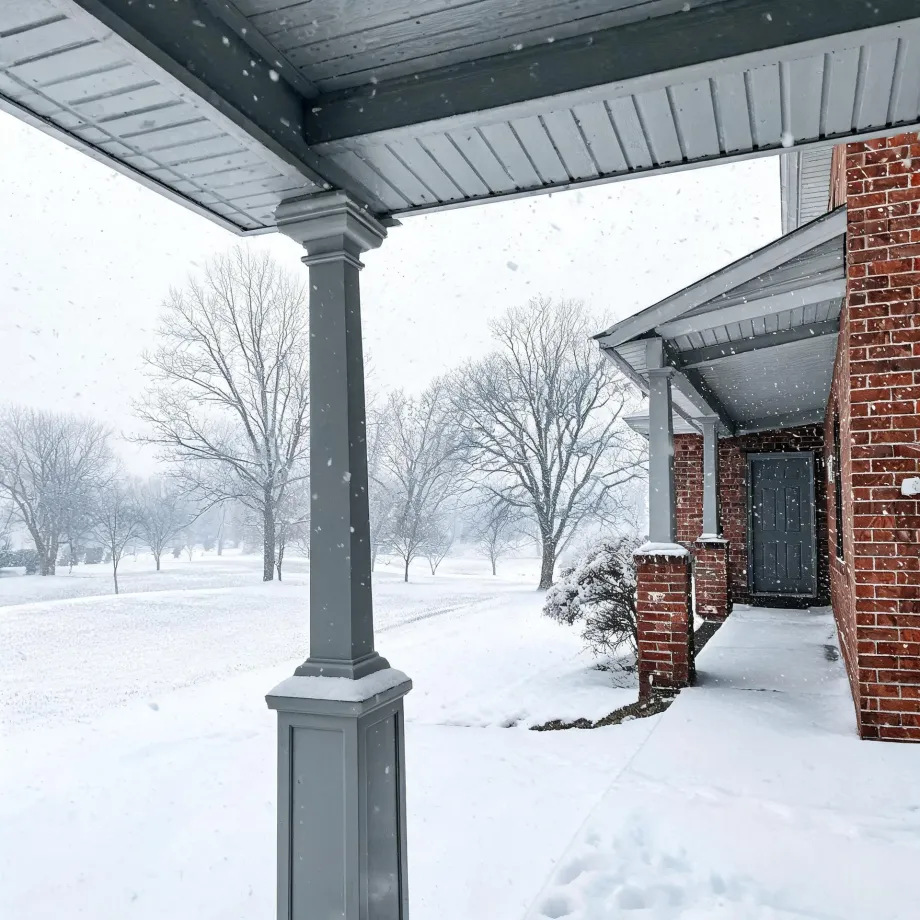
A furnace repair in Cheshire County starts with the parts that do the most work: the burner, the heat exchanger, and the ignition system. Homes in Cheshire County, NH run heat about nine months a year, from September through May. Every heating cycle stresses the ignition components a little, and a long season stacks those cycles until the wear shows up as a hard lockout or a misfire the homeowner notices on a cold morning. Contractors pricing a repair here weight those components heavily in their diagnosis because that is where the load concentrates.
Ductwork and wiring aside, what drives a furnace repair in Cheshire County is usually what a contractor finds once the cabinet is open: cracked heat exchangers, failed igniters, or worn gas valves in systems old enough that the parts supply has thinned. Half the homes in Cheshire County, New Hampshire were built in 1972 or earlier (2020-2024 ACS 5-year). Stock that old has seen multiple heating systems come and go, and the furnace running today is not the one the house was built around. A contractor working a repair here checks parts availability alongside the diagnosis, because a component that is no longer manufactured changes the job from a repair to a replacement conversation.
The Parts of a Furnace a Contractor Checks First
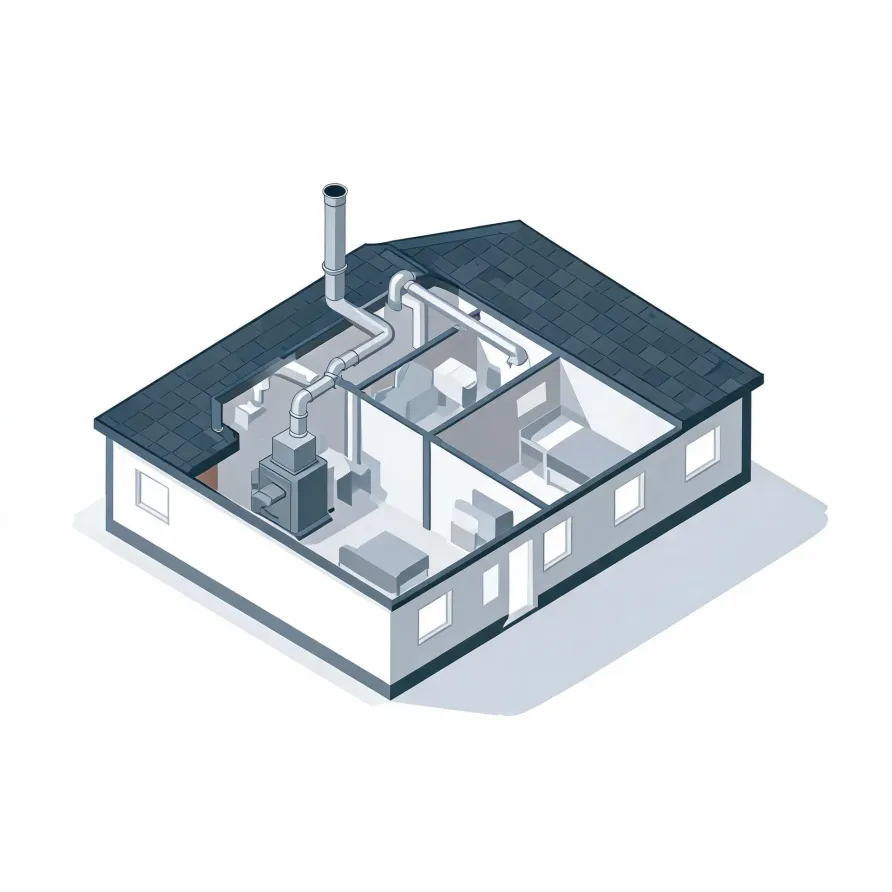
The furnace itself sits in the basement, utility room, or crawl space and is the piece a contractor opens first. Inside it, the heat exchanger is the part most worth understanding: cracks or corrosion there let combustion gases into the living space, so it gets a close inspection before anything else. The burner assembly, which sits just below the exchanger, is where the flame originates and where a contractor looks when a furnace fails to ignite or runs unevenly.
The blower motor and its fan wheel sit at the base of the furnace cabinet and push conditioned air out through the supply side of the duct system. On gas furnaces, the flue pipe runs from the top of the cabinet up through the house and out the roof or an exterior wall, carrying exhaust away from the living space. The control board ties those pieces together and is where a contractor reads fault codes to narrow down what failed.
The drawing shows a typical furnace layout, and a licensed contractor will determine which components apply to the specific system in your home.
Find a contractor in Cheshire CountyCheshire County, by the numbers
247 severe weather events were recorded in Cheshire County, New Hampshire between 2015 and 2024.
NOAA National Centers for Environmental Information, Storm Events Database, bulk CSV export, events 2015-01-01 through 2024-12-31.Half the homes in Cheshire County, New Hampshire were built in 1972 or earlier (2020-2024 ACS 5-year).
U.S. Census Bureau, 2020-2024 American Community Survey 5-Year EstimatesCheshire County, New Hampshire holds 35,899 housing units (2020-2024 ACS 5-year).
U.S. Census Bureau, 2020-2024 American Community Survey 5-Year EstimatesOwners occupy 72.7% of the occupied homes in Cheshire County, New Hampshire (2020-2024 ACS 5-year).
U.S. Census Bureau, 2020-2024 American Community Survey 5-Year EstimatesCodes & Standards Governing Furnace Repair in Cheshire County, New Hampshire6 sourced rules and standards
What happens when a contractor comes out to your home
Non-weatherized gas furnaces manufactured on or after November 19, 2015 must reach 80.0 percent AFUE.
Non-weatherized oil-fired furnaces manufactured on or after November 19, 2015 must reach 83.0 percent AFUE.
Mobile home gas furnaces manufactured on or after November 19, 2015 must reach 80.0 percent AFUE.
Non-weatherized gas furnaces manufactured on or after December 18, 2028 must reach 95.0 percent AFUE, up from the 80.0 percent minimum that applies to units manufactured before that date.
Licensing Rules for HVAC Repair in Cheshire County, New Hampshire
New Hampshire's mechanical licensing board issues nine credentials — hearth system, four fuel gas endorsements, domestic appliance technician, and master, journeyman and apprentice plumber — and a licensee may not work outside the specialty their licence names. None of the nine is an HVAC licence.
New Hampshire does not license HVAC as a trade, and says so where it matters: the plumbing licence expressly does not reach a person installing heating, cooling, air conditioning or domestic water heating systems, whether solar, oil, gas or electric. The gas piping on a gas-fired system is a separate matter and needs a fuel gas fitter licence.
Severe Weather Events in Cheshire County
Extreme weather puts real strain on a furnace. The harder a heating system works to hold temperature against what comes in from outside, the more wear it accumulates, and wear is what brings repair calls.
247 severe weather events, 2015–2024. Source: NOAA National Centers for Environmental Information, Storm Events Database.